Direct Answer
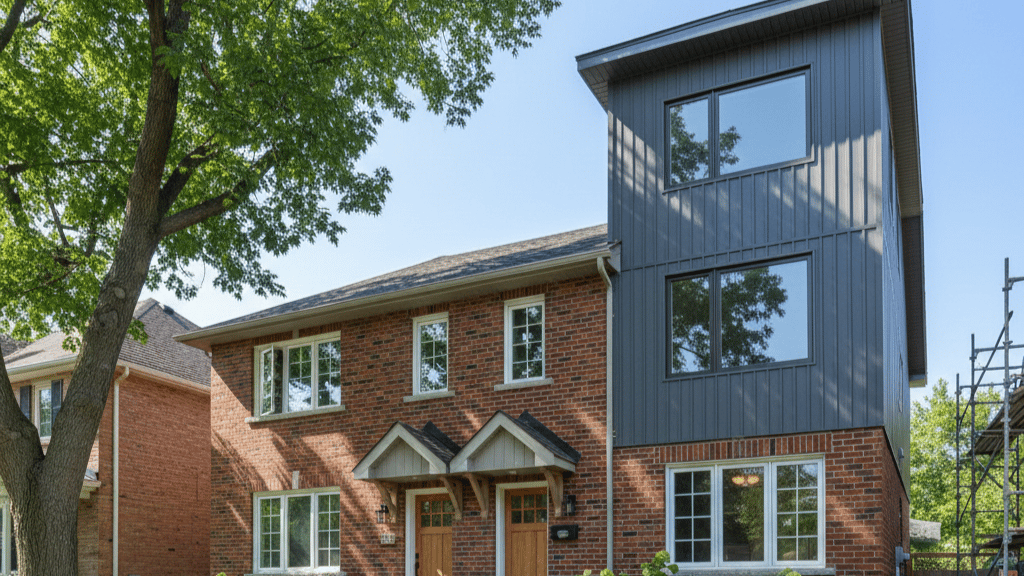
Adding a third floor to a semi-detached home in Oakville does not strictly require neighbor approval if your project fits within the "as-of-right" zoning bylaws. However, because you share a structural "party wall," you will legally require a Party Wall Agreement and likely their consent for any work impacting that shared boundary. If your design exceeds local height or density limits, you must apply to the Committee of Adjustment, where neighbors have a formal platform to voice concerns.
The Deep Dive: Zoning vs. Structural Reality
In most Oakville residential zones (such as RL5 or RL8), height limits often cap buildings at two storeys. In 2026, while the Livable Oakville Plan has evolved to encourage density, vertical additions on semi-detached homes remain complex. If your plan requires a Minor Variance for height, the Town must notify every neighbor within 60 meters. This triggers a public hearing where neighbors can object based on "looming" effects or loss of privacy factors that the Committee takes seriously in established neighborhoods.
Beyond the legalities of the Town, you face the physical reality of the Party Wall. Under Ontario law, you cannot unilaterally compromise the structural integrity of the shared wall that supports your neighbor’s roof. A professional engineer must verify that the existing foundation often built decades ago in areas like College Park or Bronte can handle the significant weight of a new third level. Without a signed agreement or a court order, touching that shared wall can lead to immediate legal injunctions.
Local Nuance in the Halton Region
Oakville’s specific bylaws add layers of protection for the town’s "stable residential character." When planning a third-floor addition in areas like Glen Abbey or River Oaks, you must consider:
-
Shadow Studies: For significant height increases, the Town may request a study to ensure you aren't casting your neighbor’s backyard into permanent darkness.
-
Tree Protection: Oakville’s private tree bylaw is among the strictest in Ontario. If your construction equipment needs to sit near a neighbor's mature oak or maple, you’ll need a permit and a certified arborist’s report.
-
The Shared Roofline: You are responsible for ensuring that the new roof drainage doesn't overwhelm your neighbor’s existing gutter system, a common point of contention in Halton Region semi-detached disputes.
Your Project Checklist
-
Zoning Certificate: Confirm the maximum allowable height for your specific street.
-
Structural Engineering: Ensure the party wall can support the $3^{rd}$ floor load.
-
Party Wall Agreement: A legal document signed by your neighbor to mitigate liability.
-
Arborist Report: Necessary if construction is within the "critical root zone" of any large trees.
Work With Oakville’s Experts
Navigating the intersection of municipal bylaws and neighbor relations requires a strategic hand. Whether you are looking to buy a property with expansion potential or selling a home with approved plans, we provide the local insight you need to succeed.
Contact Martin Group today to navigate the Oakville market with confidence.
"Profit from our experience."