The Direct Answer
Oakville is located approximately 30 to 35 kilometers from Toronto Pearson International Airport (YYZ). In standard off-peak conditions, the drive takes between 25 and 30 minutes via the QEW or Highway 407. This exceptional proximity is a primary driver for the Oakville real estate market, particularly attracting an executive demographic that prioritizes global connectivity alongside a high-end suburban lifestyle.
The Deep Dive: A Strategic Hub for Global Professionals
For residents of the Halton Region, Pearson Airport isn't just a travel hub it’s a lifestyle anchor. As we move through 2026, Halton market trends continue to show that "commuter convenience" has expanded to include international reach. Being less than half an hour away from Canada’s largest airport allows Oakville professionals to balance a global career with the tranquility of lakeside living.
The ease of access is largely due to Oakville’s unique positioning at the intersection of three major arteries: the QEW, Highway 403, and the 407 ETR. While the QEW offers a direct southern route, the 407 provides a reliable "express" alternative that bypasses much of the GTA's notorious traffic, ensuring that even mid-day departures are predictable and stress-free.
Local Nuance: Neighborhoods Built for Travel
Specific neighborhoods in Oakville are specifically positioned to capitalize on this proximity:
-
Joshua Creek: Located in North Oakville, this area offers the fastest access to the 407, often cutting airport transit time down to 20 minutes.
-
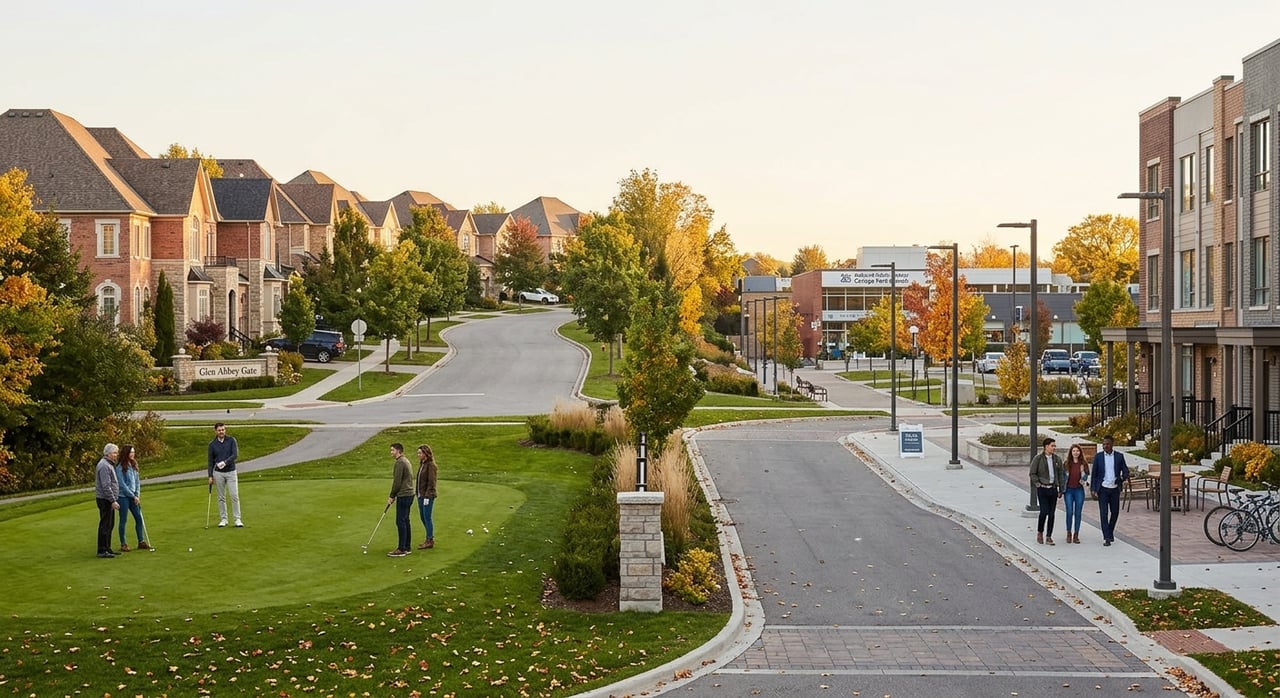
Glen Abbey: Known for its world-class golf and Oakville luxury homes, it provides a central jumping-off point for both the airport and downtown Toronto.
-
South East Oakville (Eastlake): While closer to the lake, this prestigious pocket remains a straight shot up Ford Drive to the highway corridor, making it a favorite for jet-setting executives.
Furthermore, local bylaws and flight path protections ensure that while Oakville is close enough for convenience, it remains largely undisturbed by the significant noise pollution often found in cities directly adjacent to the airport.
Modern Transit Options
For those who prefer not to drive, Oakville offers sophisticated alternatives:
-
Private Limo Services: A staple for the local corporate community, offering flat-rate transfers.
-
The GO Transit Link: The Route 40 GO Bus from the Trafalgar Road hub provides a direct, cost-effective link to Terminal 1.
-
The UP Express: Frequent travelers often take the GO Train to Union Station to connect with the dedicated airport rail link.
Plan Your Move with Local Experts
Whether you are a frequent business traveler or looking for a sound investment in a highly connected community, the right location makes all the difference. Contact Martin Group today to discover how we can help you find a home that fits your global lifestyle.
Profit from our experience.

Frequently Asked Questions
How far is Oakville from Pearson Airport?
Roughly 30 to 35 kilometres. Off-peak, the drive takes 25 to 30 minutes via the QEW or Highway 407.
What is the fastest route to Pearson from Oakville?
The 407 ETR is generally the most predictable, bypassing much of the GTA's congestion. The QEW is the direct southern route but more exposed to peak-hour delays.
Which Oakville neighbourhood is closest to the airport?
Joshua Creek, thanks to its direct 407 access — transit time often drops to about 20 minutes. Glen Abbey offers a central position for both the airport and downtown Toronto.
Is Eastlake convenient for frequent flyers?
Yes. Despite being closer to the lake, South East Oakville runs straight up Ford Drive to the highway corridor, which is why it remains popular with executives who travel regularly.
Is Oakville affected by airport noise?
Largely no. Flight path protections and local bylaws mean Oakville stays close enough for convenience without the noise exposure of communities directly adjacent to the airport.
Why does airport proximity matter for Oakville property values?
It widens the buyer pool to executives and internationally mobile professionals who need global connectivity without giving up a low-density lakeside lifestyle. That demand is a durable support for values in the pockets with the best highway access.