You've found the right house in Glen Abbey or a townhouse near Burlington's Appleby GO, and you're ready to write an offer. One of the first questions buyers ask us is: how much deposit do I need to put down when buying a home in Oakville or Burlington? It's a fair question, because the deposit is real money that leaves your account within a day of your offer being accepted.
Quick answer: In Oakville and Burlington, a typical offer deposit is about 5% of the purchase price, paid within 24 hours of acceptance and held in trust by the listing brokerage. It isn't an extra cost. It counts toward your down payment on closing day.
How Much Is a Typical Deposit in Oakville and Burlington Right Now?
Most offers in Halton Region include a deposit of roughly 5% of the purchase price, though the exact amount is negotiable. Using October 2026 average sale prices, here's what 5% looks like:
- Oakville, all property types (average $1,383,011): about $69,000
- Oakville detached (average $1,833,285): about $92,000
- Oakville freehold townhouse (average $977,899): about $49,000
- Burlington, all property types (average $1,046,822): about $52,000
- Burlington condo apartment (average $658,858): about $33,000
In a balanced market like the one we're seeing this winter, some sellers will accept a smaller deposit. In a competitive situation, a larger deposit can signal that you're a serious, well-prepared buyer.
Is the Deposit the Same as a Down Payment?
No, but the deposit becomes part of your down payment. The deposit is a good-faith payment that shows the seller you're committed. On closing day, it's credited toward the purchase price, so you only bring the remaining down payment and closing costs to your lawyer.
For example, if you buy a $1,000,000 home in River Oaks with a 20% down payment, you'd need $200,000 in total. If you provided a $50,000 deposit with your offer, you'd bring the remaining $150,000 (plus closing costs like land transfer tax and legal fees) at closing.
This matters for planning. If your down payment is sitting in an FHSA, RRSP, or GIC, talk to us and your lender early about when those funds can actually be accessed, because the deposit is due long before closing.
When Is the Deposit Due, and Where Does It Go?
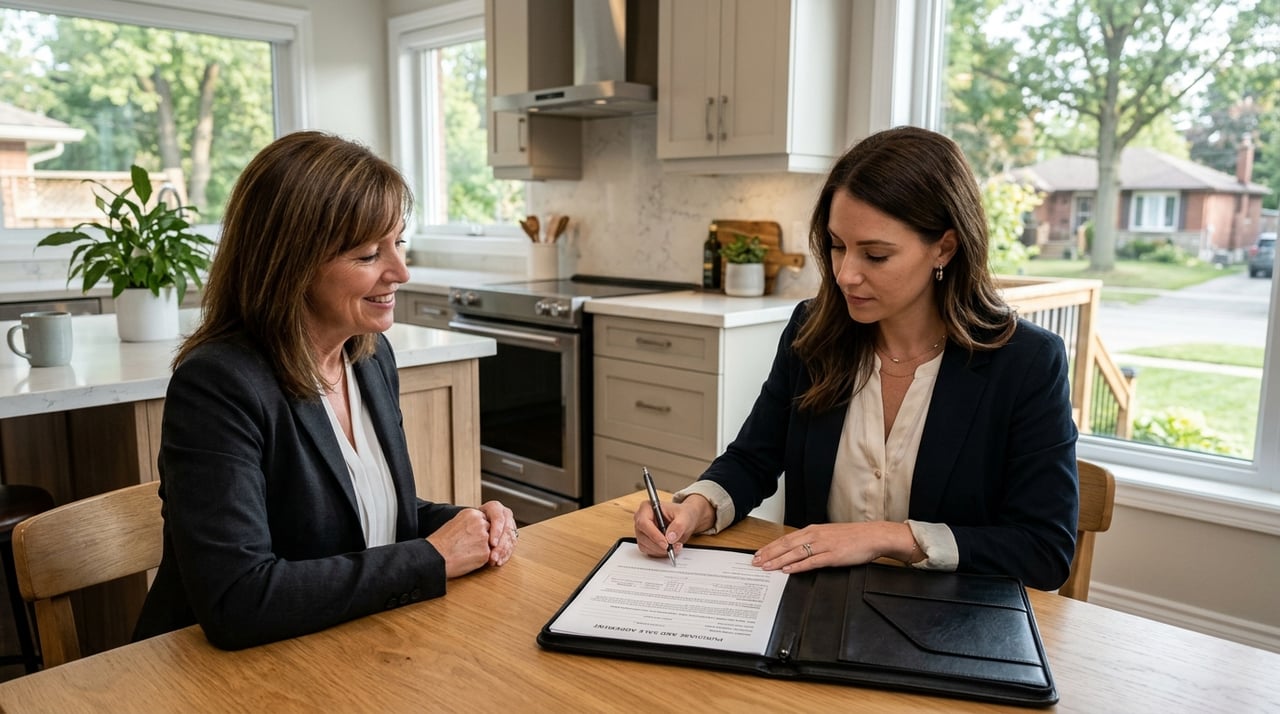
The deposit is usually due within 24 hours of your offer being accepted, and it's held in the listing brokerage's trust account until closing. Occasionally an offer will say the deposit is submitted "herewith," meaning it comes with the offer itself, which you'll sometimes see in multiple-offer situations.
Most buyers pay by bank draft or wire transfer. Because large transfers can take time to set up, and daily limits can get in the way, it's smart to confirm the details with your bank before you write an offer, not after. Missing the deposit deadline can put your deal at risk.
Your money doesn't go directly to the seller. It sits in trust, where it's protected and accounted for, and it's released at closing as part of the purchase funds.
Can You Lose Your Deposit?
You can, if you back out of a firm deal without a valid reason. Once all conditions are waived or fulfilled, your agreement is binding. If you walk away at that point, the seller may keep your deposit and could pursue you for additional losses if they resell for less.
If your offer is conditional, for example on financing or a home inspection, and a condition isn't met, the deal can end and the deposit is normally returned. Even then, both parties usually sign a mutual release before the brokerage can return the funds.
That's why we're careful about conditions. With prices softer than they were a year ago, more buyers in Oakville and Burlington are including financing and inspection conditions again, and that protection is worth having.
What Should Buyers Watch for This Winter?
This winter, watch three things: your deposit amount relative to your strategy, your access to funds, and your conditions. A balanced market gives buyers more room to negotiate terms, including a smaller deposit or a later deposit deadline.
If you're buying a resale condo in Burlington or a townhouse in West Oak Trails, a 5% deposit may be well within reach. If you're stepping up to a detached home in College Park or Old Oakville, plan for a larger figure and have it ready before you start touring. New construction is different again: builders often require staged deposits of 10% to 20% spread over several months, so read the payment schedule closely.
About the Author
Cory Martin is a top-ranked real estate broker and co-founder of The Martin Group, serving Oakville, Burlington, and the surrounding GTA markets. With 18 years of experience and a career sales volume exceeding $310 million, he ranks in the top 1% of real estate agents nationwide. His comprehensive industry expertise spans first-time home buyers, downsizers, luxury listings, and investment properties, backed by stellar local ratings and a proven track record of client success.
The Bottom Line
A deposit of about 5% is standard in Oakville and Burlington, it's due fast, and it becomes part of your down payment at closing. The key is having those funds ready and making sure the right conditions protect them. At Martin Group, we walk every buyer through deposit amounts, timing, and conditions before an offer goes in, so there are no surprises.
Thinking about buying this winter? Call Martin Group at (905) 338-2083 or visit themartingroup.ca to start the conversation.
Source for prices: TRREB October 2026 average sold prices via wowa.ca.