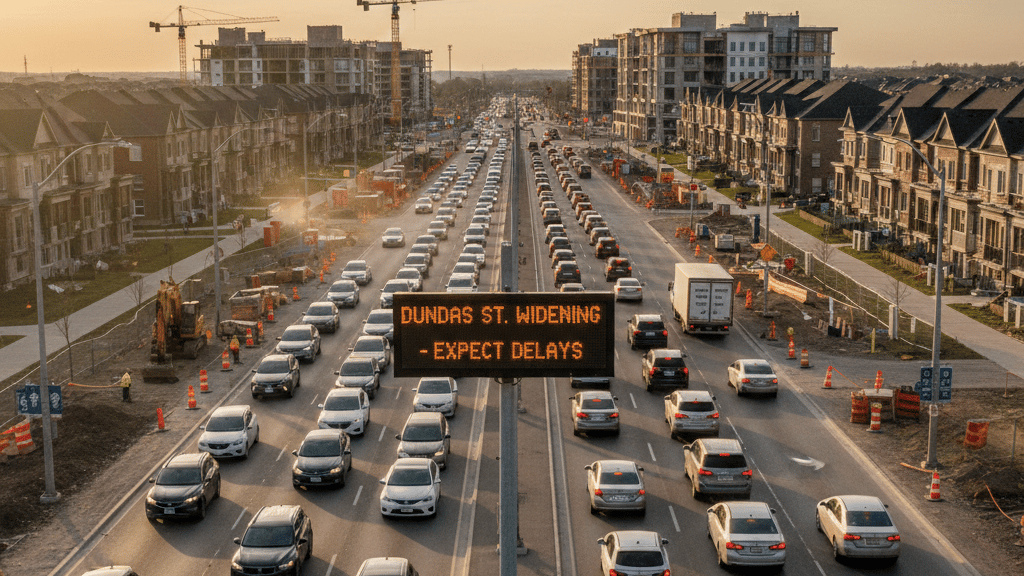
The Direct Answer
Traffic on Dundas Street in Oakville is currently heavy and characterized by significant peak-hour congestion due to rapid residential intensification. As the primary east-west arterial for North Oakville, it experiences frequent bottlenecks between Bronte Road and Ninth Line. While ongoing road widening to six lanes and the future Bus Rapid Transit (BRT) aim to alleviate pressure, drivers should expect "stop-and-go" conditions during commuting hours.
The Deep Dive: Navigating North Oakville’s Growth
Dundas Street has effectively become the "Main Street" for the Halton Region’s northern corridor, but its infrastructure is still playing catch-up with its population. The intensification in neighborhoods like The Preserve and Glenorchy has brought thousands of new residents to the area, many of whom rely on Dundas to access the Oakville Trafalgar Memorial Hospital, the 407, or the Uptown Core.
The current reality for drivers is a mix of construction-related delays and high-volume commuter traffic. Halton Region is actively working on the Dundas Street Improvements Project, which includes widening the road from four to six lanes. However, with massive new developments—such as the proposed seven-tower condo cluster at Dundas and Neyagawa Boulevard—the density is increasing faster than the pavement can expand.
Local Nuance: Neighborhood Impacts
If you are researching a move to North Oakville, it is essential to understand how specific "micro-bottlenecks" affect your daily routine:
-
The Neyagawa Transition: This intersection is a major focal point for future density. With over 2,000 units proposed for this corner alone, it is a high-watch area for long-term traffic flow.
-
The Sixteen Mile Creek Crossing: Bridging the gap between Glen Abbey and the new northern developments often creates a funnel effect, particularly during the morning rush toward Mississauga.
-
Smart Growth Realities: Unlike the wide, mature boulevards of South Oakville, North Oakville is built on "Smart Growth" principles. This means higher density and a reliance on future transit like the Dundas BRT, which is still years from full implementation.
Survival Tips for North Oakville Commuters:
-
Leverage the 407: If your budget allows, using the 407 ETR via the entrances at Bronte or Neyagawa can save 15-20 minutes during peak times.
-
Monitor Signal Phasing: Local residents often note that traffic light synchronization on Dundas can be "hit or miss" during construction phases; expect extra time for left-hand turns.
-
Explore William Halton Parkway: Use the newly completed sections of the William Halton Parkway as a secondary east-west bypass to avoid the Dundas commercial storefronts.
Ready to Navigate the North Oakville Market?
The rapid evolution of Dundas Street from a rural road to an urban artery presents both challenges and opportunities for homeowners. Whether you are concerned about how future intensification will impact your property value or you are looking to buy in a high-growth pocket like The Preserve, local insight is your most valuable asset.
At Martin Group, we don't just track listings; we track the infrastructure, bylaws, and regional developments that shape your daily life and your investment's future.
Contact Martin Group today for a private consultation and localized market analysis.
"Profit from our experience."

Frequently Asked Questions
How bad is traffic on Dundas Street in Oakville?
Heavy at peak hours, with frequent bottlenecks between Bronte Road and Ninth Line. Expect stop-and-go conditions during morning and evening commutes, compounded by ongoing construction.
What is being done to fix Dundas Street congestion?
Halton Region's Dundas Street Improvements Project is widening the road from four to six lanes, and a Bus Rapid Transit corridor is planned. The BRT is still years from full implementation.
Why is congestion outpacing the road work?
Density is growing faster than the pavement. Proposals such as the seven-tower condo cluster at Dundas and Neyagawa Boulevard — over 2,000 units at that corner alone — add residents well ahead of the widening's completion.
Which intersections are the worst?
Neyagawa Boulevard is the main focal point given the volume of proposed density there. The Sixteen Mile Creek crossing also funnels traffic between Glen Abbey and the newer northern communities, especially in the morning push toward Mississauga.
Should traffic change where I buy in North Oakville?
It is worth driving your actual commute at your actual departure time before you commit. Streets a few minutes apart can have very different access to the 407, the hospital and the Uptown Core.
How does North Oakville differ from South Oakville for driving?
North Oakville was built on smart growth principles — higher density and a planned reliance on transit — rather than the wide mature boulevards of the south. Until the BRT arrives, that means more cars on fewer through-routes.