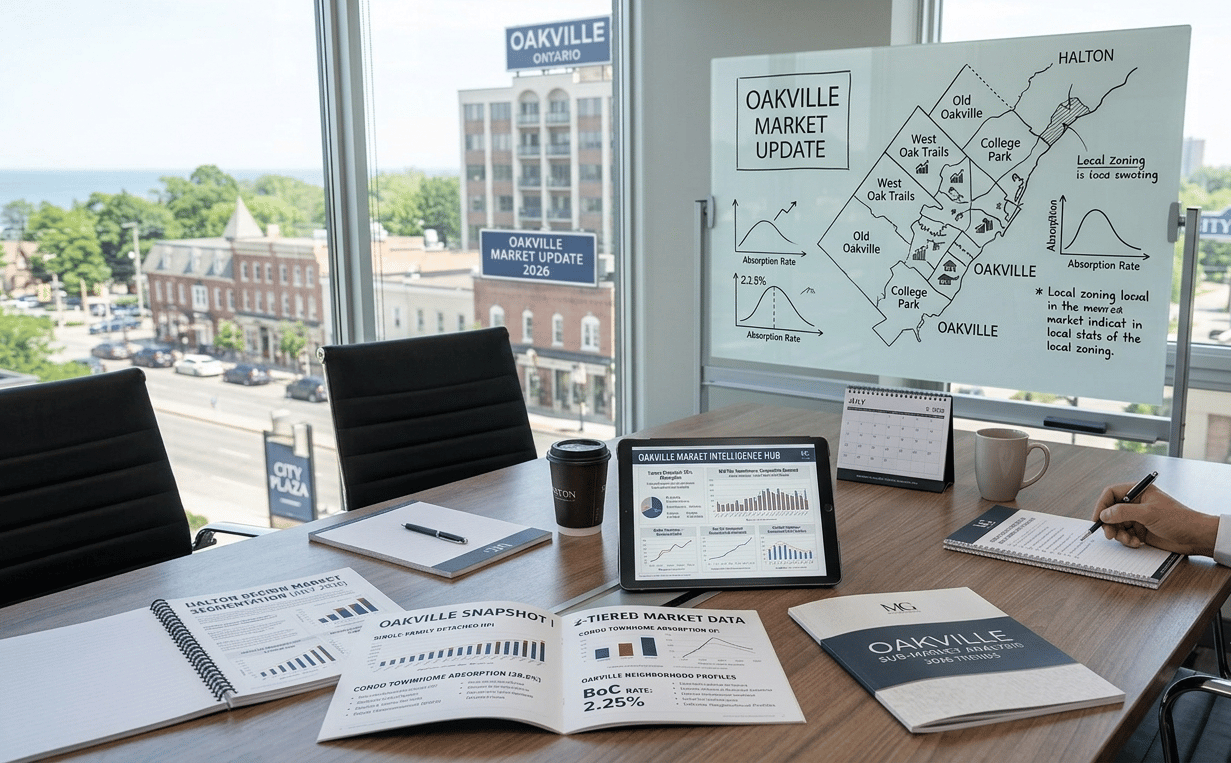
As of July 5, 2026, the Oakville real estate market presents a highly segmented terrain for buyers and sellers across Halton Region. A distinct two-tier market has emerged: the single-family detached segment has transitioned into a buyers' market with a 26% absorption rate and subtle HPI price drops, while condo townhomes remain firmly in sellers' market territory at 38.6%, fueled by demand for mid-tier affordability.
The Deep Dive: Balancing Rates, Inventory, and Prices
The Bank of Canada’s recent decision on June 10, 2026, to hold its key overnight lending rate steady at 2.25% for the fifth consecutive announcement has brought predictability, but it continues to test the limits of local purchasing power. While variable-rate holders are benefiting from the series of cuts that ended late last year, the broader reality of a stable but restrictive rate environment means that buyer budgets remain carefully balanced. This macro-economic friction explains the recent dips in our local Housing Price Index (HPI), where 1-storey detached homes dropped by 1.7% and 2-storey detached properties edged down by 1.8% over the past month.
However, looking past headline price drops reveals an intriguing shift in market health. While detached inventory builds—causing absorption rates to slip to 26%—the multi-family and townhome segments are showing remarkable resilience. Condo townhomes spiked to a 38.6% absorption rate, and freehold townhomes climbed to 22.8%. Because purchasing power is tightly anchored to current interest rates, active buyers are strategically stepping back from high-end luxury brackets and competing heavily for well-positioned mid-tier inventory. This shift is concentrating demand and keeping absorption rates deceptively tight across highly efficient housing styles.
Local Nuance: Neighborhood Dynamics in Oakville
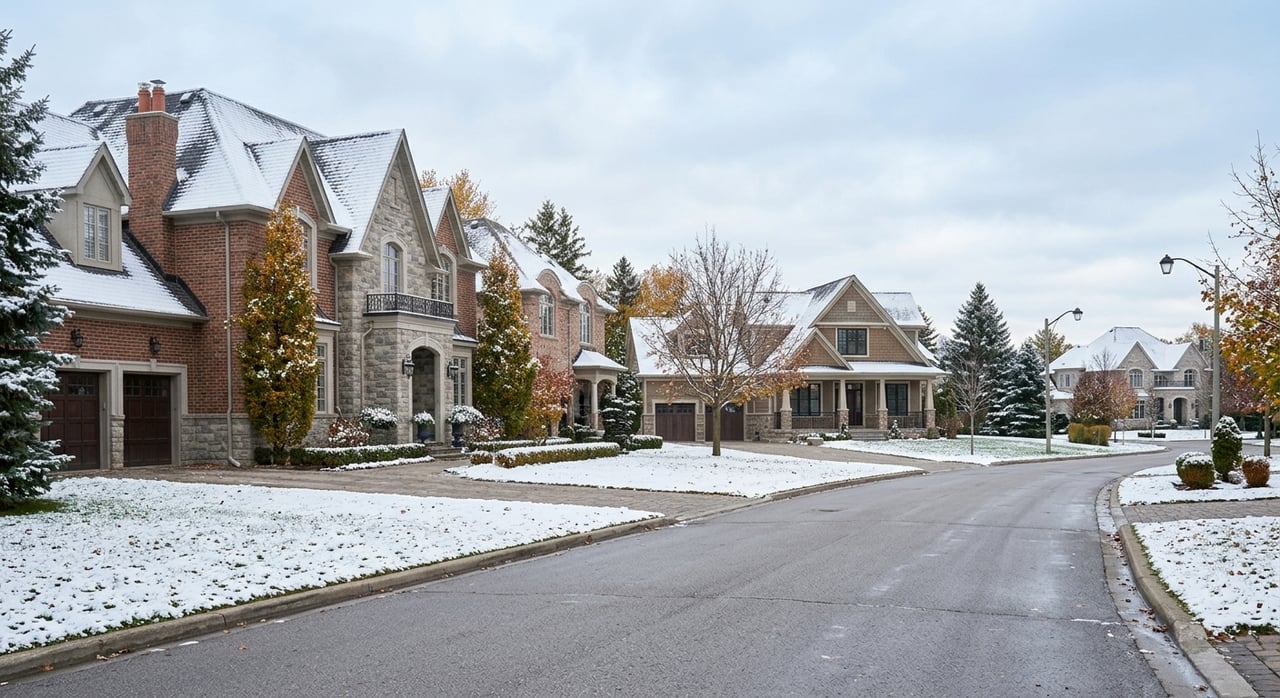
In a premium market like Oakville, generalized trends rarely tell the whole story. In historic, high-value enclaves like Old Oakville, the luxury detached market is experiencing classic buyers' market conditions. Discerning purchasers are using extended days-on-market to negotiate meaningful terms and price adjustments on sprawling, single-family estates.
Conversely, high-density residential corridors in College Park, West Oak Trails, and River Oaks tell a entirely different story. Driven by young families and downsizers trying to maximize utility within the current 2.25% BoC rate framework, townhomes and apartments (which saw a minor price contraction of just 0.4% alongside a rise to a 15.36% absorption rate) are moving steadily. Thanks to local zoning developments favoring gentle density near top-tier Halton schools, appropriately priced townhomes in these pockets continue to generate swift turnarounds, defying the broader detached cooldown.
Strategic Takeaways for Your Next Move
For Buyers: You finally have leverage in the detached space. The drop to a 26% absorption rate means less pressure to waive conditions and a rare opportunity to secure premium Old Oakville real estate without intense bidding wars.
For Sellers: Alignment with the current data is critical. If you own a condo townhome in family-centric neighborhoods like River Oaks, current demand trends favor you. However, if you are listing an Oakville luxury home, sharp, analytical pricing is essential to capture active capital rather than letting your listing go stale.
About The Author
Cory Martin is Broker and Co-Founder of Martin Group, serving Oakville, Burlington and the surrounding Halton communities. Martin Group has performed in the Top 1% by TRREB MLS® sales volume every year since 2008.
Maximize Your Next Move
Navigating a fragmented market requires an analytical eye, deep local roots, and a refusal to rely on guesswork. Whether you are looking to capture undervalued detached inventory or strategically position an attached asset for maximum return, we ensure your next financial move is flawless. Contact Martin Group today to schedule your private, data-driven market consultation.
"Profit from our experience."

Frequently Asked Questions
What kind of market is Oakville in as of July 2026?
A distinctly two-tier one. Single-family detached homes have transitioned into a buyers’ market at a 26% absorption rate, while condo townhomes remain firmly in sellers’ market territory at 38.6%, driven by demand for mid-tier affordability.
How long has the Bank of Canada held its rate at 2.25%?
As of the June 10, 2026 decision, for the fifth consecutive announcement. That brings predictability, though a stable but restrictive rate environment keeps buyer budgets carefully balanced.
Why are Oakville townhomes outperforming detached homes?
Because purchasing power is tightly anchored to current interest rates, active buyers are stepping back from high-end luxury brackets and competing heavily for well-positioned mid-tier inventory. Condo townhomes have spiked to 38.6% absorption and freehold townhomes to 22.8%.
Where do Oakville buyers have the most negotiating room?
In the luxury detached market, particularly historic enclaves like Old Oakville, where extended days on market let discerning purchasers negotiate meaningful terms and price adjustments on single-family estates.