The Direct Answer: Oakville Market Snippet
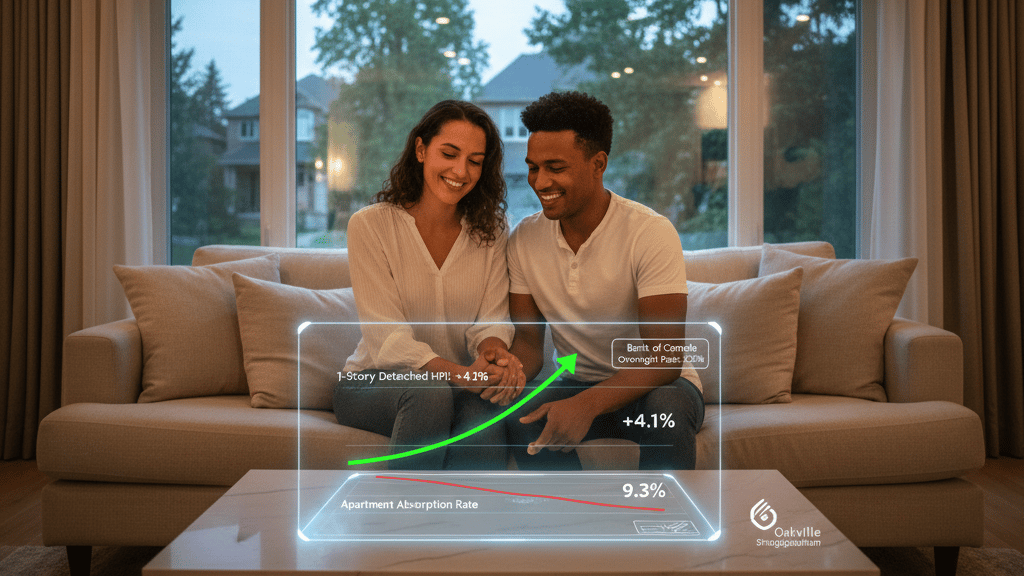
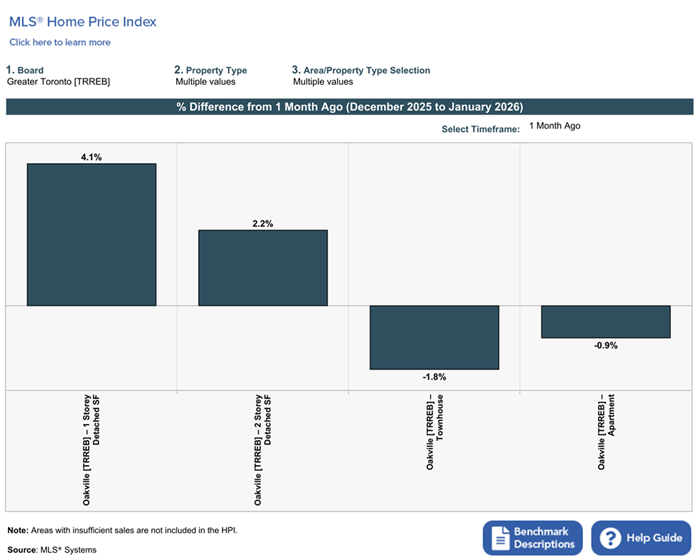
As of February 2, 2026, the Oakville real estate market has transitioned into a "Strategic Equilibrium." Following the Bank of Canada’s January 28th decision to hold the overnight rate at 2.25%, buyer confidence is surging. While 1-storey detached homes saw a 4.1% HPI increase, townhomes and apartments remain in buyer-friendly territory with slight price adjustments. Absorption rates have cooled town-wide, signaling a balanced environment with significant negotiation leverage for prepared buyers.
The Deep Dive: Stability Meets Opportunity
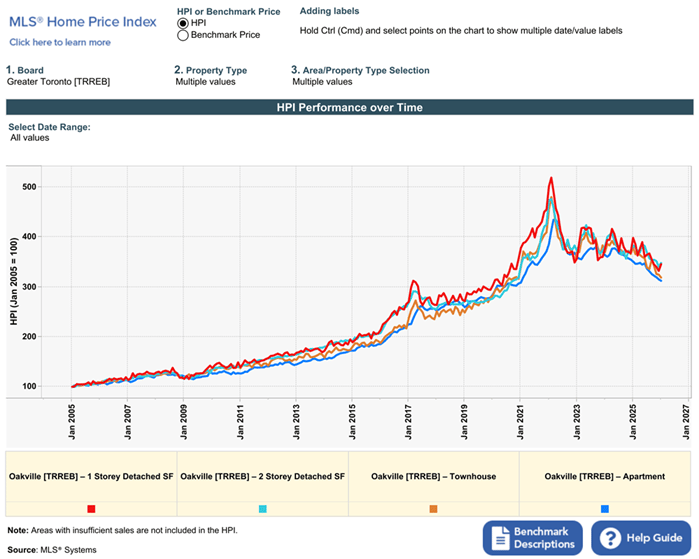
The latest data released this February paints a picture of a market that has finally caught its breath. The Bank of Canada’s recent series of rate decreases throughout late 2025 has successfully lowered the "affordability floor," bringing sidelined move-up buyers back into the fold. However, the market is no longer the monolith of years past; it is now defined by property-specific performance. While detached homes particularly 1-storey bungalows continue to lead the pack with a 4.1% HPI increase, the condo and townhome sectors have seen modest corrections of -1.8% and -0.9% respectively.
This divergence is largely due to the "Absorption Rate," a critical indicator of market velocity. In December, we saw pockets of intense heat, but as of today, rates have dipped across the board. Apartments are at a 9.3% absorption rate, firmly placing them in a buyers' market, while Condo Townhomes have plummeted from 40.5% to 17.4%. For sellers, this means that "aspirational pricing" is a strategy of the past. For buyers, the current window offers a rare combination of lower borrowing costs and decreased competition, allowing for more thoughtful, condition-based inspections.
Local Nuance: From Old Oakville to West Oak Trails
In Oakville, your postal code dictates your strategy. In established areas like Old Oakville and South East Oakville, the scarcity of "turnkey" luxury estates keeps the market resilient regardless of broader trends. Conversely, in West Oak Trails and River Oaks, we are seeing a "flight to quality." Families are increasingly prioritizing homes that back onto the Sixteen Mile Creek trail system or those within the highly-ranked French Immersion catchments.
Meanwhile, the "North Oakville Effect" is in full swing. As new developments north of Dundas face construction delays due to labor shortages, demand is spilling back into mid-town pockets like College Park. Buyers here are looking for "mortgage helper" potential homes with secondary suites or accessory dwelling units as a way to offset the cost of living in one of the GTA’s most prestigious hubs.
Key February Market Indicators
-
Bank of Canada Rate: Held at 2.25% (Next announcement: March 18, 2026).
-
Detached Homes: 12.9% absorption rate; 1-storey styles leading growth at 4.1%.
-
Condo Market: 9.3% absorption rate (Strong Buyer’s Market).
-
Inventory Shift: Active listings in Halton are up, but "move-in ready" homes are still selling in under 21 days.
-
Buyer Leverage: Increased ability to include financing and inspection conditions compared to 2024/2025.
Whether you are looking to capitalize on the high demand for detached family homes or seeking to enter the market through the cooling condo sector, navigating these nuances requires a data-driven approach.
Ready to navigate the Oakville market with confidence? Contact Martin Group today to develop a custom strategy for your next move.
Profit from our experience.

Frequently Asked Questions
Which Oakville property type is performing best in February 2026?
1-storey detached homes, leading with a 4.1% Home Price Index increase. Condos and townhomes moved the other way, with modest corrections of 1.8% and 0.9% respectively.
Where do Oakville buyers have the most leverage right now?
The condo market, at a 9.3% absorption rate — a strong buyer’s market. Condo townhomes also fell sharply, from 40.5% to 17.4%, so buyers can take a more thoughtful, condition-based approach than in recent years.
How fast are Oakville homes selling in early 2026?
Active listings across Halton are up, but move-in ready homes are still selling in under 21 days. Aspirational pricing no longer works; well-presented, accurately priced homes still move quickly.
What is the North Oakville Effect?
As new developments north of Dundas face construction delays from labour shortages, demand is spilling back into mid-town pockets like College Park. Buyers there are seeking mortgage-helper potential — homes with secondary suites or accessory dwelling units — to offset the cost of living in the area.