The Direct Answer (The "Snippet")
To fix a second floor that is significantly hotter than the rest of your home during Oakville summers, you must address uneven airflow and poor thermal boundaries. The most effective strategy is a combination of immediate DIY pressure balancing—such as adjusting supply registers and shifting your thermostat fan from "Auto" to "On"—paired with long-term retrofits like smart multi-zone HVAC dampers or upgrading to an energy-efficient cold-climate air-source heat pump.
The Deep Dive
In many traditional two-story homes across the Greater Toronto Area, families battle the "Two-Story Trap" every July and August. The main level feels like a refrigerator, while the upstairs bedrooms resemble a sauna. This temperature imbalance occurs because hot air naturally rises, sun exposure beats directly down onto the roofline, and standard single-zone thermostats are almost always located on the main floor. Once the lower level reaches its target temperature, the system shuts down, leaving the upper levels stranded without adequate cooling.
Fortunately, homeowners can achieve immediate relief with a few simple operational shifts. Flipping your thermostat's fan setting to "On" rather than "Auto" forces the system to continuously circulate and blend air across all levels, even when the outdoor compressor isn't actively running. Additionally, you can manually balance your home's airflow using the "70/30 register trick." This involves partially closing the supply vents on your lower levels to push a greater volume of chilled air upward. However, ensure you never close lower vents entirely, as restricting too much airflow can cause system pressure to back up and freeze your air conditioner’s evaporator coil.
For a permanent solution, upgrading your mechanical infrastructure is the most reliable path to lasting comfort and improved home equity. Transitioning to a modern, multi-zone HVAC system utilizes motorized dampers within your ductwork to direct cooling precisely where it is needed based on real-time temperature readings from individual floors. Alternatively, many residents are moving toward cold-climate air-source heat pumps. These systems do double duty, operating as hyper-efficient, whisper-quiet central air conditioners during high-heat months while dramatically reducing your home's carbon footprint.
Local Nuance
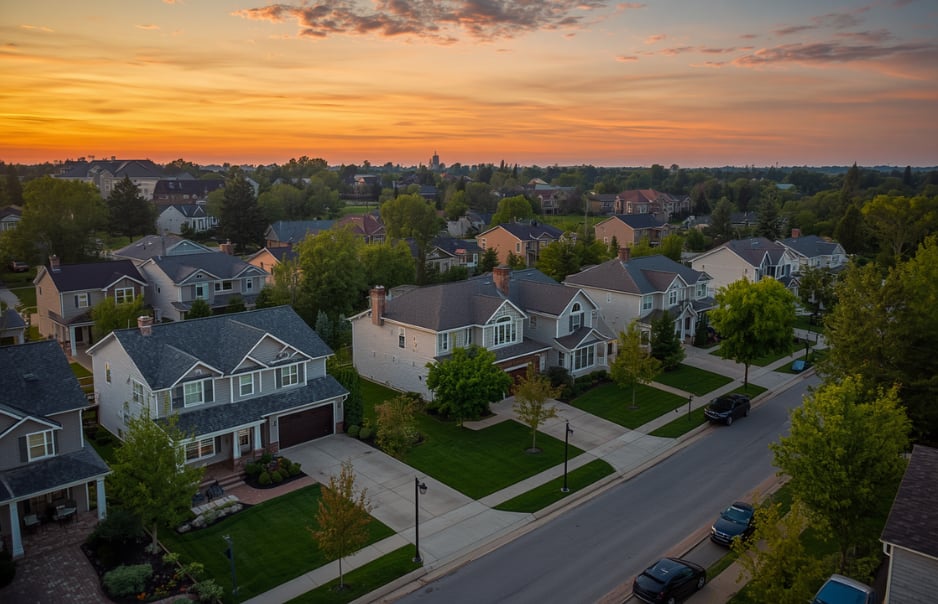
This climate balancing act is especially critical in Oakville's established residential pockets. Neighborhoods featuring mature tree canopies and classic two-story footprints—such as older builds in Bronte, Glen Abbey, and the multi-level executive homes in Joshua Creek—frequently struggle with original, single-zone duct designs that were simply not engineered for modern summer heatwaves.
Furthermore, optimizing your system right now aligns perfectly with current financial incentives. Local homeowners can significantly offset the upfront capital required for these mechanical improvements by leveraging the 2026 Ontario Home Renovation Savings Program (HRSP), administered through Save on Energy and Enbridge Gas. Under the program’s no-assessment "Single Upgrade" pathway, you can secure up to $7,500 back for an eligible cold-climate air-source heat pump installation, or up to $1,250 for standalone attic insulation upgrades—which stops your roof from acting like a massive radiator. In today's discerning Halton Region real estate market, properties featuring verified, rebate-backed energy retrofits hold a distinct competitive edge, protecting both your everyday comfort and your long-term property value.
Frequently Asked Questions
Will installing a zoning system or heat pump increase my Oakville home’s resale value?
Yes. Today's buyers in the Halton Region look past surface cosmetics. Turnkey energy-efficient upgrades, lower projected utility bills, and verified climate resilience give listings a distinct competitive edge in a normalizing market.
Do I need a mandatory home energy audit to claim the 2026 Ontario HRSP heat pump rebate?
No. Under the "Single Upgrade" pathway of the 2026 Home Renovation Savings Program framework, standalone improvements like cold-climate heat pumps, smart thermostats, or the standalone attic insulation offer do not require pre- or post-retrofit EnerGuide energy assessments.
Can I close my basement vents completely to force air to the second floor?
No, you should never close vents completely. Restricting more than 20–30% of your home's total registers starves the HVAC system of necessary airflow, increasing static pressure. This can cause your air conditioner to malfunction or shorten the lifespan of the blower motor.
How does attic insulation affect my second-floor temperature in the summer?
If your attic is under-insulated, solar radiation heats your roof up significantly. This intense heat transfers straight down through your ceiling into upper-level bedrooms. Upgrading to at least R-50 insulation creates a thermal barrier that blocks this heat transfer and reduces the cooling load on your AC.
About The Author
Cory Martin is a top 1% REALTOR® nationwide and co-founder of Martin Group, specializing in data-driven residential strategy throughout Oakville, Burlington, and the GTA. With 18 years of industry experience, $310M+ in volume, and recognition in Top Agent Magazine, Cory provides authoritative insight on neighborhood valuations, local economic trends, and property acquisitions across Old Oakville, West Oak Trails, and College Park.
Get Expert Advise
Thinking about upgrading your home’s mechanical infrastructure to boost comfort, or curious how energy-efficient retrofits impact your property value in today's shifting market? Navigating the local real estate landscape requires hyper-local insights. Connect with Martin Group today to receive a data-driven evaluation of your home’s equity and learn what today's Halton Region buyers are looking for in their next purchase.
Profit from our experience.