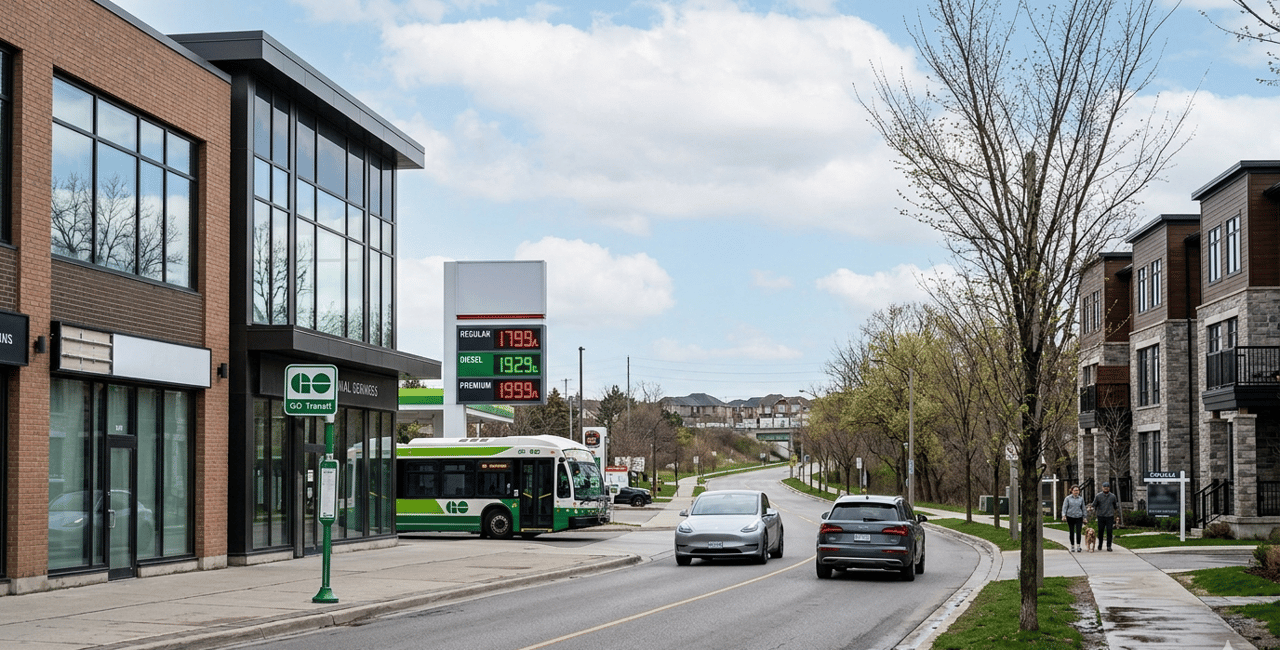
As of late March 2026, the Oakville market is navigating a "Double-Edged Sword." While the Bank of Canada’s March 18th hold at 2.25% provided a psychological floor for variable-rate holders, the surge in energy costs has sent gas prices toward $1.80/L and pushed 5-year bond yields upward.
For the modern Realtor, the "easy" 3% gain predicted for 2026 has transformed into a high-stakes game of pricing precision. Here is the historical and data-driven breakdown of how energy and interest are colliding in the GTA.
1. The Macro Squeeze: Budgets vs. Borrowing
The market is currently being hit by two distinct forces that act as a "stealth tax" on the average household:
- The Consumption Squeeze: Higher gasoline prices drain monthly disposable income, often referred to as the "commuter tax."
- The Qualification Ceiling: Even with the BoC on hold, the bond market's reaction to energy inflation has pushed fixed-rate mortgages up by 30 basis points this week. This effectively shaves $30,000–$40,000 off the maximum purchase price for a buyer on a $1M mortgage.
2. Historical Lessons: Rates vs. Oil
History shows us that while oil shocks create headlines, interest rates create trends. We are entering this period from a position of existing stress—the national MLS Home Price Index sat 4.8% below last year heading into March.
Historical Episode | Primary Driver | Market Outcome | 2026 Takeaway |
1979–1982 | Energy & Inflation | 18% Rates crashed the market. | Rates matter more than oil. As long as BoC holds, we avoid a '79 scenario. |
2008–2009 | Oil Spike ($140/bbl) | Sales volume dropped; exurbs hit hardest. | High-net-worth pockets (Oakville) are insulated but not immune. |
2022–2023 | Rapid Rate Hikes | HPI fell for 15 straight months. | We are currently in a "Recovery-Interruptus" phase, not a fresh bull market. |
3. The "Spatial Shift": Why Location Matters (Again)
Historically, when gas prices spike, we see a "spatial shift" in housing demand. For every 10% increase in fuel costs, home values in high-commute "drive-until-you-qualify" areas typically see a relative softening compared to urban cores.
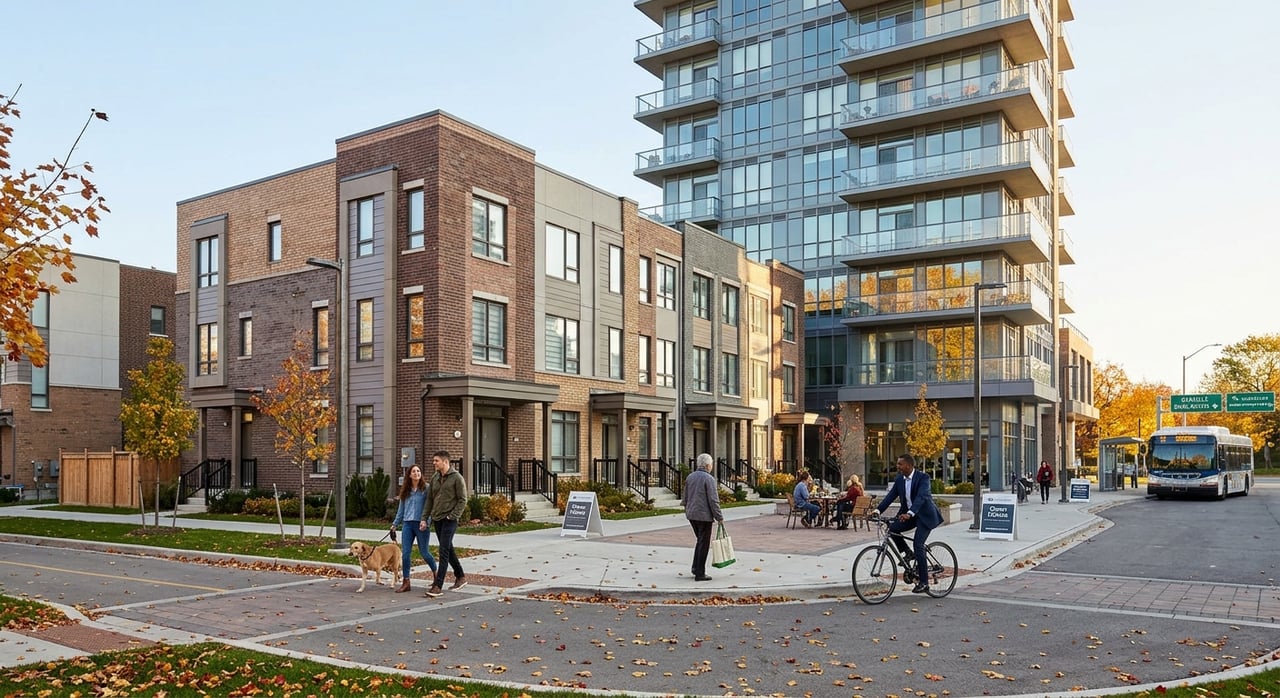
- The GO Transit Hedge: Oakville’s robust rail connection acts as a stabilizer. Demand for homes within a 10-minute radius of the Oakville or Bronte GO stations remains historically stickier than car-dependent pockets.
- The "Missing Middle": Current data shows Freehold Townhomes leading the charge, with absorption jumping to 21.8% recently. Buyers are trading "square footage" for "location" to offset the rising cost of the commute.
4. The 90-Day Rule: Precision Over Hype
The most actionable insight for sellers right now is the 90-Day Window. Historically, the first three months after an energy-led shock is when the gap between "priced right" and "priced aspirationally" becomes brutal.
- The "Freeze" Period: Buyers typically pause for 90 days to see if price spikes are a "blip" or a "trend."
- Pricing Precision: Properties priced based on January/February comps are now effectively "overpriced" because the 30-bps rate jump has reduced buyer purchasing power. Success in Spring 2026 requires pricing for today's yield, not last month's hopes.
About the Author
Cory Martin is Broker and Co-Founder of Martin Group, serving Oakville, Burlington and the surrounding Halton communities. Martin Group has performed in the Top 1% by TRREB MLS® sales volume every year since 2008.
The Bottom Line
Oakville is entering a "Rational Market." The "froth" of the post-pandemic era has been replaced by calculated, budget-conscious decision-making. While Old Oakville’s detached segment remains a supply-scarcity play, the broader market will lead with transit-rich assets that hedge against inflation.

Frequently Asked Questions
How do rising energy costs affect what I can afford in Oakville?
Through the bond market. Energy inflation pushed fixed-rate mortgages up 30 basis points, which effectively shaves $30,000 to $40,000 off the maximum purchase price for a buyer on a $1M mortgage — even though the Bank of Canada held its rate at 2.25% on March 18.
Do oil prices or interest rates matter more to the housing market?
Interest rates. Oil shocks create headlines, but rates create trends. The 1979–1982 episode crashed the market through 18% rates, and as long as the Bank of Canada holds, that scenario is avoided.
Which Oakville homes hold their value best when fuel costs rise?
Transit-connected ones. Demand for homes within a 10-minute radius of the Oakville or Bronte GO stations is historically stickier than car-dependent pockets, and freehold townhomes have led absorption at 21.8% as buyers trade square footage for location.
Why are January comparables unreliable for pricing a home now?
Because the 30-basis-point rate jump reduced buyer purchasing power, properties priced on January and February comparables are effectively overpriced. Buyers also tend to pause for roughly 90 days after an energy-led shock to judge whether a price move is a blip or a trend.