In Oakville, properties most prone to riverine flooding are located within the regulated floodplains of Bronte Creek, Sixteen Mile Creek, and Fourteen Mile Creek. Conservation Halton’s updated mapping identifies these high-risk zones, where specific neighborhoods like South Oakville, Bronte, and College Park face increased scrutiny. Homes in these areas often require specialized insurance and face strict development permits for renovations or expansions.
The Deep Dive: Flood Risks and Property Realities
For Oakville residents, the conversation around flood zones has shifted from "if" to "where." As climate change intensifies, the Conservation Halton regulatory flood maps are frequently updated to reflect modern hydraulic modeling. This means some homes originally purchased outside a hazard zone may now be classified within the 100-year floodplain. This designation is not just a label; it directly impacts your ability to obtain building permits for additions, pools, or decks, as the town and conservation authority aim to protect the integrity of the watershed and prevent property damage.
Beyond the physical risk, the financial implications are significant. Properties within these zones often command higher insurance premiums and may see a "risk discount" in their market value compared to identical homes on higher ground. However, the Oakville market remains resilient; luxury homes on ravine lots in Glen Abbey or near Sixteen Mile Creek continue to be highly sought after for their privacy and natural beauty, provided the owners understand and mitigate the associated risks.
Local Nuance: Neighborhoods to Watch
Navigating the local landscape requires knowing which specific areas are under the closest watch by municipal planners and environmental authorities:
-
South Oakville & Bronte: Low-lying areas near the lake and the mouth of Bronte Creek are historically sensitive, particularly where the "spill zones" extend into residential streets.
-
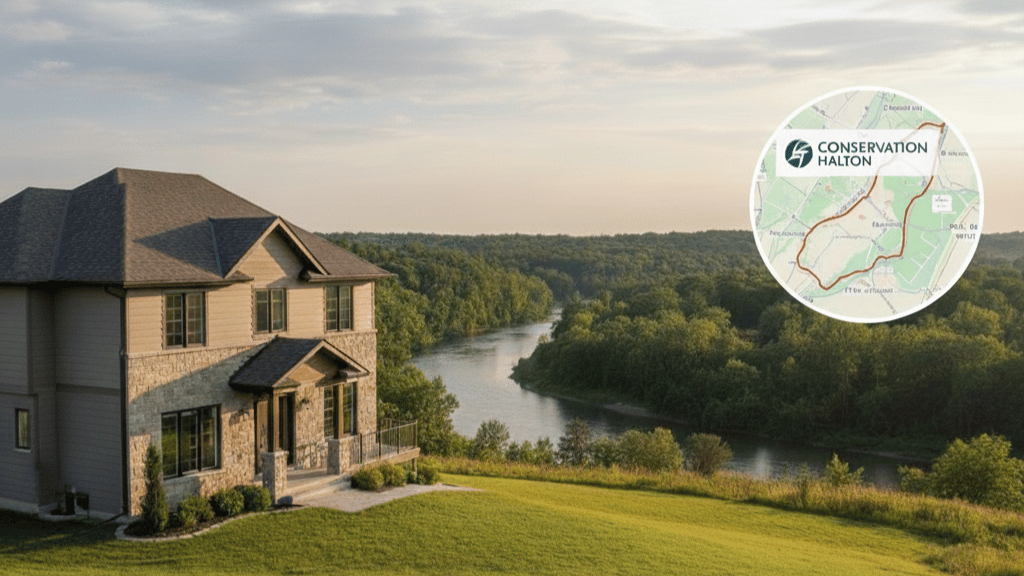
Glen Abbey & College Park: These neighborhoods are defined by the deep valleys of Sixteen Mile Creek. While the valley lands offer stunning views, the lower elevations are prone to significant seasonal flooding.
-
Fourteen Mile Creek & Joshua Creek: Recent urban developments have led to increased focus on these corridors, where over-land flow can impact basement seepage during heavy Halton rain events.
Key Considerations for Oakville Buyers and Sellers
If you are transacting in a potentially sensitive area, keep these factors at the top of your checklist:
-
Consult Conservation Halton Maps: Never rely on old surveys; always check the most recent Approximate Regulation Limit (ARL).
-
Insurance Disclosure: Sellers should be transparent about flood history to maintain deal integrity.
-
Permit Restrictions: Any exterior work including "hardscaping" or rebuilding requires a specialized permit if you are within a regulated area.
Ready to Navigate the Oakville Market?
Understanding environmental risks is a critical step in protecting your real estate investment. Whether you are buying a ravine-lot home in Glen Abbey or selling a lakeside property in Bronte, you need a partner who understands the local bylaws and Halton regional data.
Contact Martin Group today for a comprehensive market analysis and expert guidance on Oakville's unique landscape.
Profit from our experience.