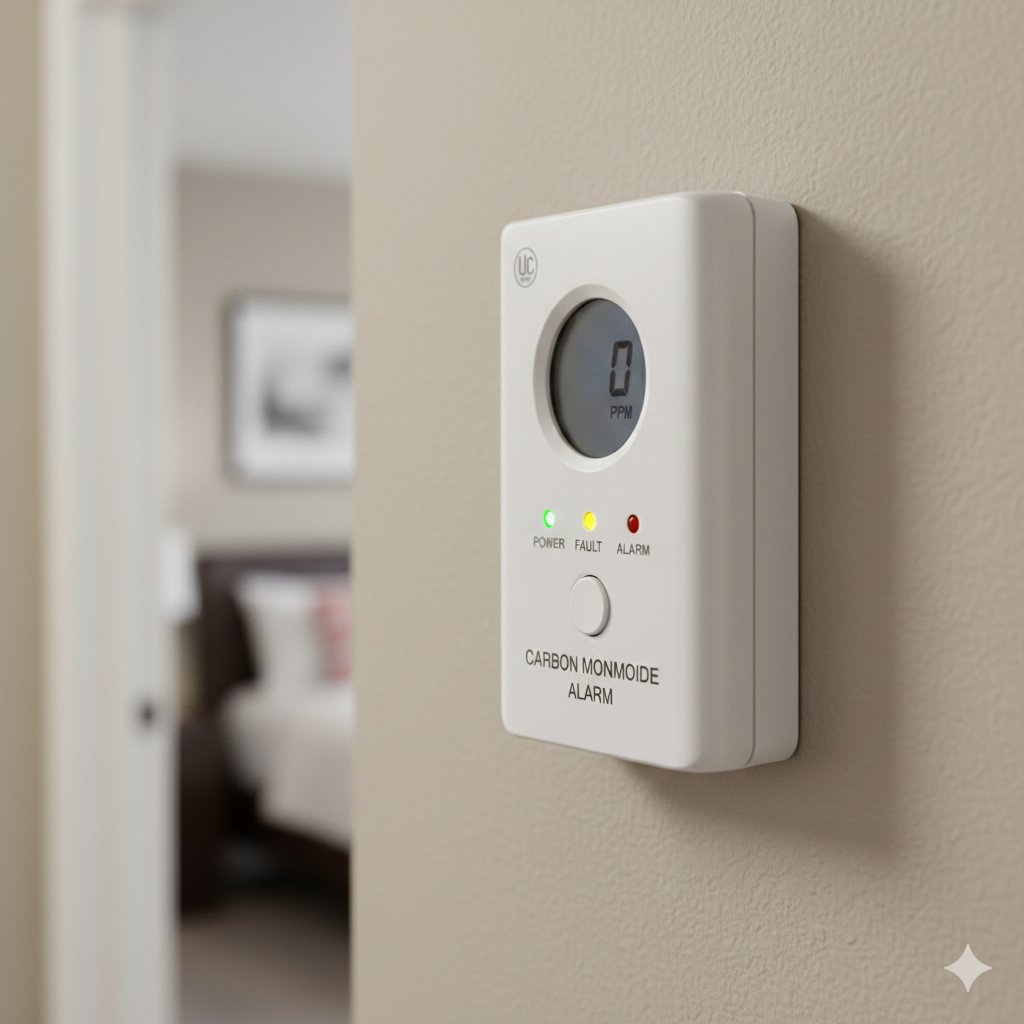
The Ontario Fire Code (OFC) is undergoing significant revisions to strengthen requirements for mandatory carbon monoxide (CO) alarms in residential buildings, with the new rules coming into effect on January 1, 2026.
The primary objective of these changes is to enhance public safety and minimize the risk of illness or death from CO, a gas known for being invisible, odorless, and colorless, produced by appliances that burn fuel incompletely.
Here are the essential details of the updated code:
Expanded Requirements for Residential Buildings
-
Single-Family Homes and Units: For any residence that contains a fuel-burning appliance (such as a gas or wood furnace, boiler, water heater, etc.) or has an attached garage, CO alarms must now be installed on every storey of the home. This expands the previous rule, which only mandated alarms near sleeping areas.
-
Apartment and Condo Buildings: If these larger residential structures utilize fuel-burning systems for heating, CO alarms must also be placed in the public corridors of the building.
-
Exemptions: Properties that are entirely electric and do not have any fuel-burning equipment or an attached garage are not required to have CO alarms.
Responsibilities of Owners and Occupants
-
Landlords/Owners: They are responsible for purchasing, correctly installing, and providing tenants with instructions on the use and maintenance of the CO alarms.
-
Tenants/Occupants: They are responsible for testing the units every month and promptly reporting any operational issues or problems to their landlord.
Installation and Maintenance Standards
-
Placement: Alarms should be mounted high up on walls or ceilings, steering clear of corners and air vents. They must be located within a 10-meter radius of all sleeping areas.
-
Types and Certification: Available units include hardwired, battery-operated, and plug-in models. All CO alarms must be certified by a recognized agency, such as the Canadian Standards Association (CSA 6.19), Underwriters Laboratories of Canada (ULC 218), or Electrical Testing Laboratories (ETL).
-
Upkeep: Residents should conduct a test monthly to ensure the audible alarm is working, replace batteries once a year, and replace the entire unit according to the manufacturer's recommended lifespan, typically every five to ten years.
Action Required: Protect Your Family and Maximize Your Home Valuation
Don't wait for the deadline! The new CO alarm requirements become mandatory on January 1, 2026.
Review your home's setup today, ensure you have certified alarms on every level, and commit to monthly testing. For homeowners preparing to list, compliance with these updated safety standards is not just a legal requirement, it's a critical factor in a successful home valuation and a non-negotiable part of a well-maintained property.
For expert advice on ensuring your property meets all current safety codes and to understand how these updates impact your home's true market value, contact Martin Group today for a complimentary home valuation. Make sure your home is compliant, your family's safety and your investment are the most important details.

Frequently Asked Questions
What changed in Ontario's carbon monoxide alarm rules?
As of January 1, 2026, homes with a fuel-burning appliance or an attached garage must have CO alarms on every storey. The previous rule only required them near sleeping areas.
Does my condo or apartment building need alarms?
If the building uses fuel-burning systems for heating, yes — CO alarms must also be installed in public corridors, not only inside units.
Is my home exempt?
Only if it is entirely electric with no fuel-burning equipment and no attached garage. An attached garage alone triggers the requirement even in an all-electric home.
Who is responsible, the landlord or the tenant?
Landlords must purchase, correctly install and provide instructions for the alarms. Tenants must test them monthly and promptly report any problems.
Where should alarms be installed?
High on walls or ceilings, away from corners and air vents, and within 10 metres of all sleeping areas. Hardwired, battery-operated and plug-in models are all acceptable.
What certification do alarms need?
Certification by a recognized agency — CSA 6.19, ULC 218 or ETL. Test monthly, replace batteries annually, and replace the unit itself according to the manufacturer's expiry date.