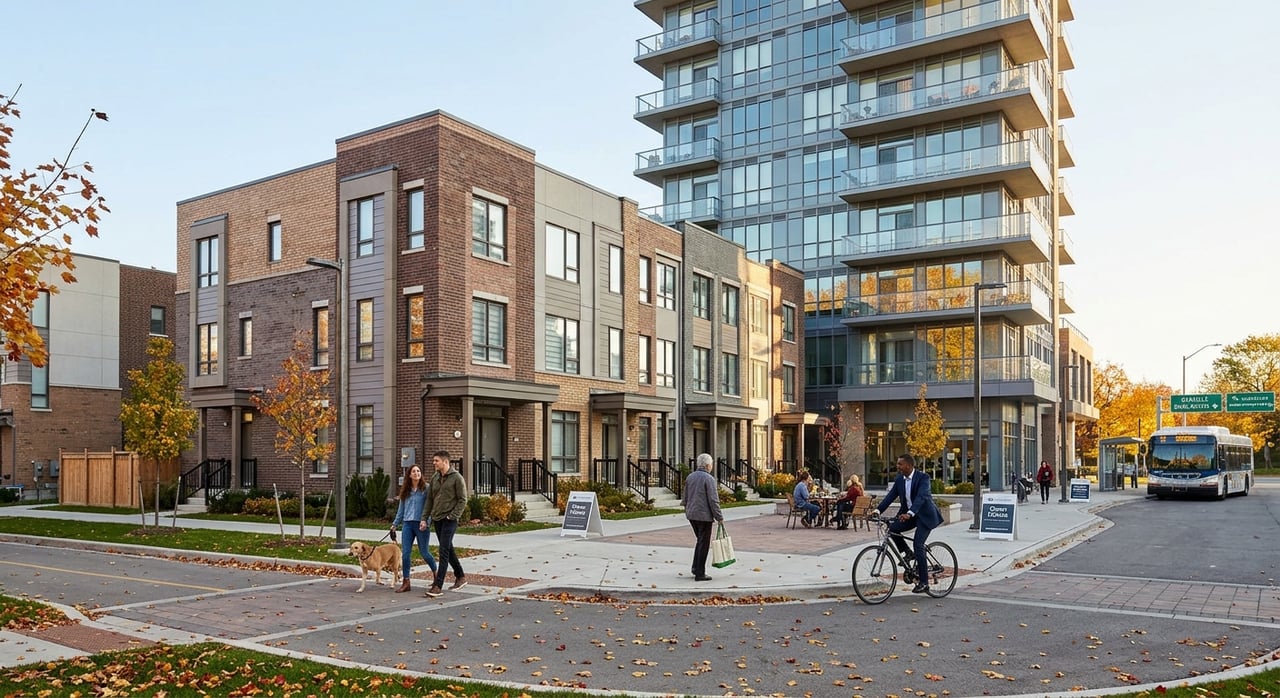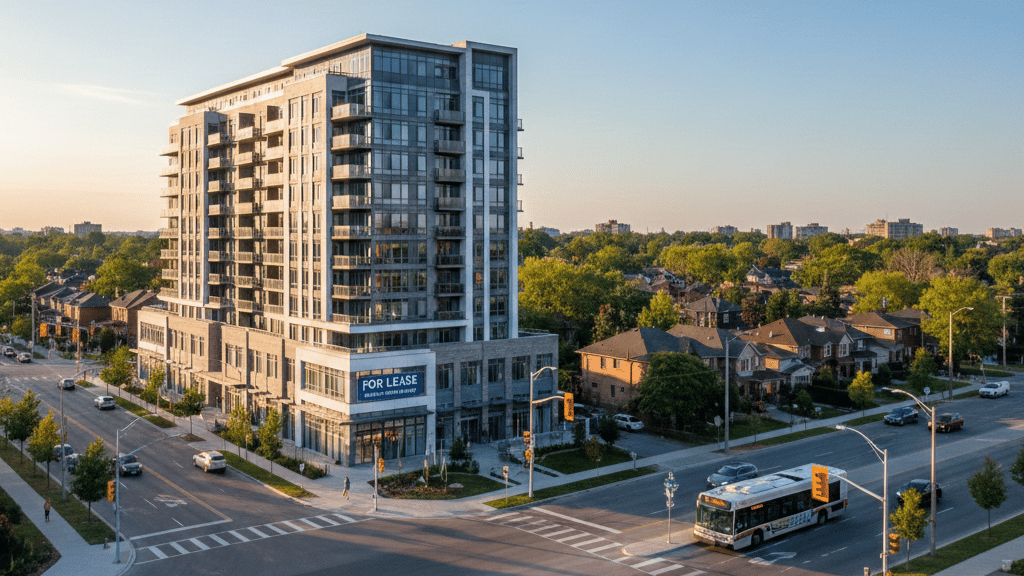
In the Dundas Urban Core, mid-rise development heights are generally capped at 8 to 12 storeys (approximately 29.5 to 45 metres). While the base zoning often dictates an 8-storey limit to maintain a human-scale streetscape, recent amendments and "bonusing" provisions frequently allow projects to reach 12 storeys, provided they contribute specific community benefits or adhere to the Uptown Core intensification guidelines.
The Deep Dive: Dundas Street’s Urban Transformation
The Dundas Street corridor is the backbone of North Oakville’s transit-oriented future. Under the Livable Oakville Plan and the North Oakville East Secondary Plan, the Town has designated this area as a "Dundas Urban Core" (DUC). This designation is designed to balance the need for high-density housing with the aesthetic of a walkable, suburban-urban hybrid.
While "mid-rise" is technically defined by the Town as buildings between 5 and 12 storeys, developers often navigate a complex "performance zone" framework. For instance, buildings within 50 metres of Dundas Street East are typically held to a 29.5-metre (8-storey) limit to prevent a "canyon effect." However, as Halton Region pushes for Bus Rapid Transit (BRT) integration, we are seeing a trend where 12-storey approvals become the standard for modern mixed-use builds that include ground-floor retail and public realm enhancements.
Local Nuance & Neighborhood Impact
The application of these height limits varies significantly depending on which pocket of the Dundas corridor you are eyeing.
-
The Uptown Core (Trafalgar & Dundas): This is Oakville's highest-density node. While the mid-rise "base" remains 12 storeys, recent site-specific amendments have cleared the way for much taller "landmark" towers (up to 28–31 storeys) to anchor the intersection.
-
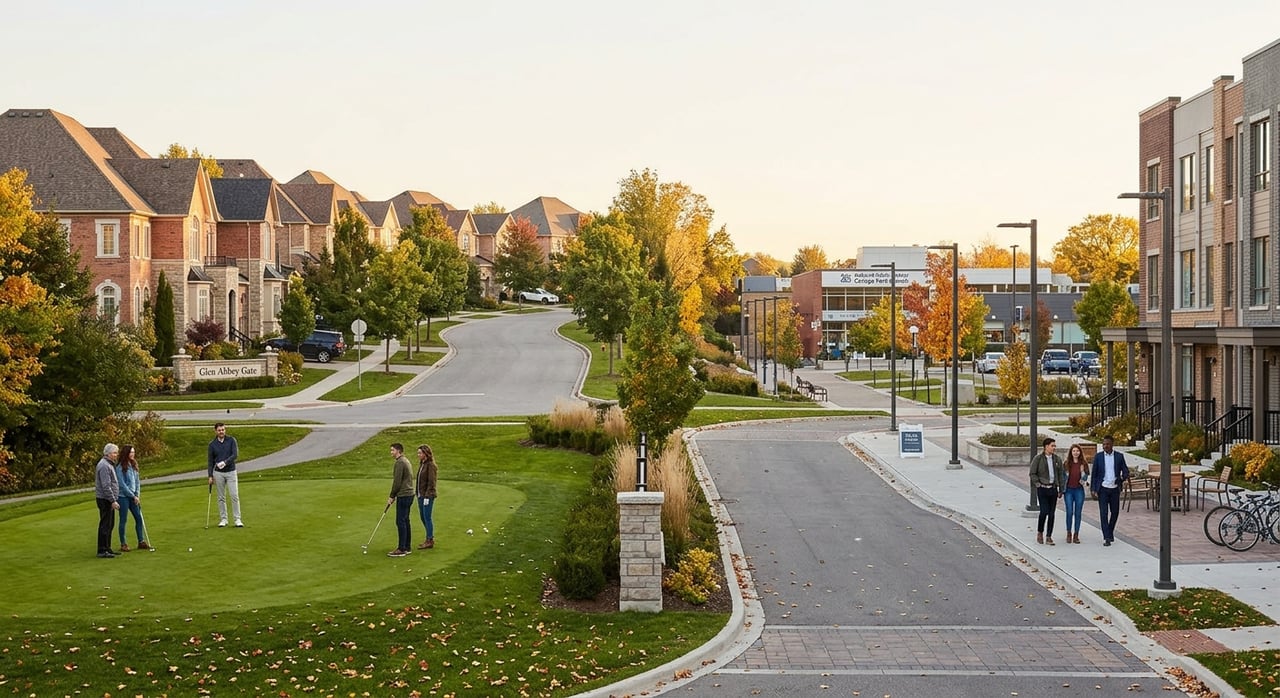
Glen Abbey & West Oak Trails: Near neighborhoods like Glen Abbey Encore, the focus remains on "appropriate transition." Developers must often use "angular planes"—a technical requirement where the building's height must recede as it gets closer to existing low-rise residential streets—to ensure privacy for established homes.
-
Bronte Road Intersection: As development moves toward the Bronte area, the Town prioritizes "street wall" consistency, ensuring that new mid-rises provide a continuous, attractive facade that buffers the residential interiors from the heavy traffic of Dundas.
Key Regulations at a Glance
-
Standard Mid-Rise Cap: 8 storeys (approx. 29.5m).
-
Maximum Mid-Rise with Incentives: 12 storeys (approx. 45m).
-
Minimum Height: 2 storeys (to ensure urban density).
-
Retail Requirement: Most DUC zoning requires a minimum 4.5m height for the first storey to accommodate commercial storefronts.
Ready to Navigate the Oakville Market?
The Dundas corridor is evolving rapidly, and understanding the nuances of local zoning can be the difference between a missed opportunity and a high-yield investment. Whether you are selling a family home in Joshua Creek or looking to diversify your portfolio with a North Oakville condo, you need a team that translates complex bylaws into clear strategies.
Contact Martin Group today to discuss your next move in the Halton Region.
"Profit from our experience."

Frequently Asked Questions
How tall can buildings be on Dundas Street?
Generally 8 to 12 storeys, roughly 29.5 to 45 metres, in the Dundas Urban Core. Base zoning often sets 8 storeys, with bonusing provisions allowing 12 where a project delivers community benefits.
What is the Dundas Urban Core?
A designation under the Livable Oakville Plan and the North Oakville East Secondary Plan covering the Dundas corridor, intended to balance high-density housing against a walkable, human-scale streetscape.
Why is there a 29.5-metre limit near the street?
To prevent a canyon effect. Buildings within 50 metres of Dundas Street East are typically held to that 8-storey equivalent so the street does not become a walled corridor.
Can buildings exceed 12 storeys anywhere on Dundas?
At the Uptown Core, yes. Site-specific amendments at Trafalgar and Dundas have cleared the way for landmark towers of 28 to 31 storeys to anchor the intersection.
How are established neighbourhoods protected?
Through angular planes — a requirement that a building's height recede as it approaches existing low-rise streets. Near Glen Abbey Encore and West Oak Trails, appropriate transition is the governing principle.
Why are 12-storey approvals becoming standard?
Halton's push for Bus Rapid Transit integration. Mixed-use buildings with ground-floor retail and public realm improvements are increasingly approved at the upper end of the range.