The Direct Answer (The "Snippet")
The MLS® Home Price Index (HPI) is the most accurate tool for tracking Oakville real estate trends because it measures changes in a constant, "benchmark" property rather than relying on volatile average selling prices. While average or median prices fluctuate based on the specific mix of luxury estates and smaller condos sold in a given month, the HPI acts like the Consumer Price Index, isolating actual inflation or deflation to show real equity growth for homeowners across the Halton Region.
The Deep Dive
When evaluating local real estate markets, relying solely on monthly average prices can lead to misleading conclusions. For instance, if several multi-million dollar lakeside estates sell in Bronte during a single month, the municipal average price will spike dramatically, even if the underlying value of standard detached homes remained completely flat.
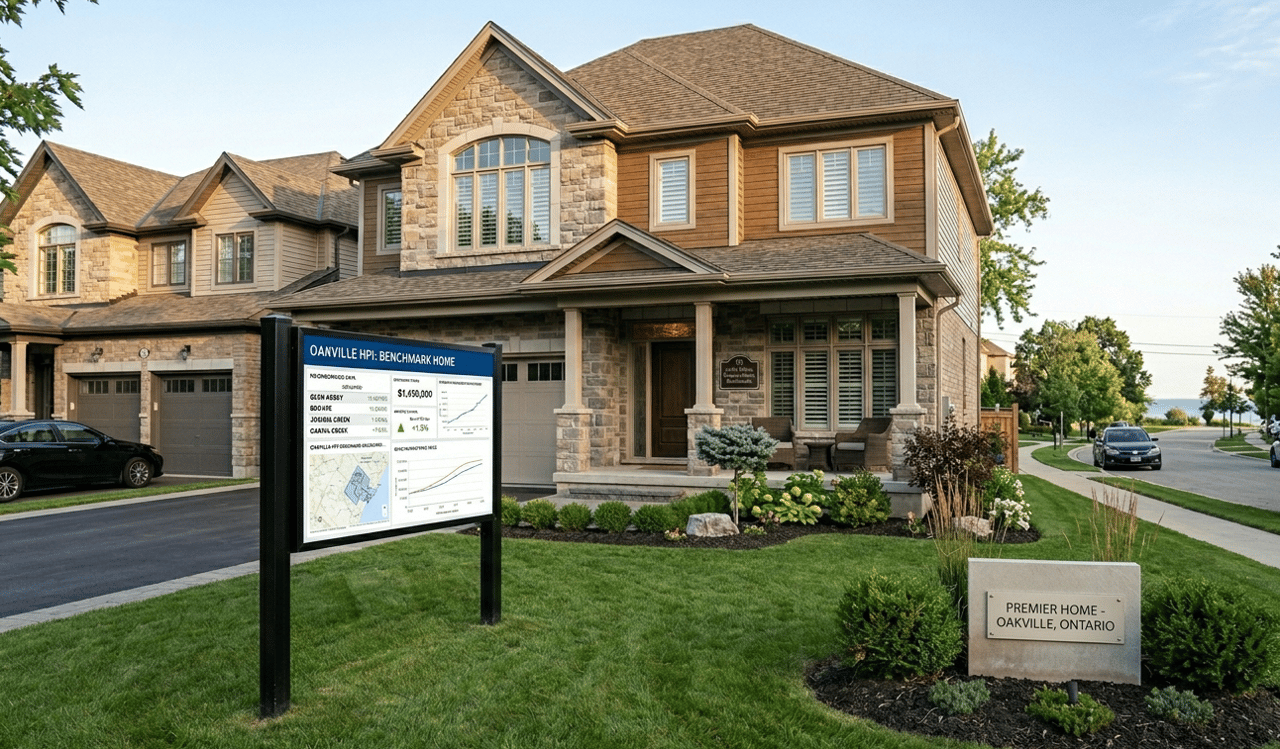
The MLS® Home Price Index corrects this statistical noise by establishing a standardized "benchmark home." This hypothetical property possesses specific attributes typical of its neighborhood such as a fixed square footage, number of bedrooms, and lot size. By tracking how the value of this consistent asset changes over time, the HPI provides an apples-to-apples comparison that reveals the true trajectory of property values.
For home sellers, understanding the index is critical for strategic pricing. The HPI uses both a dollar value (the benchmark price) and a percentage index based on a historical baseline. When the index moves, it signals a structural shift in buyer demand and market momentum. It allows you to separate overall market inflation from specific value-adding renovations you may have completed on your own property.
Local Nuance
In Oakville, analyzing the HPI requires a hyper-local approach, as price behavior varies significantly between neighborhoods. High-density, newer-growth areas like North Oakville or Joshua Creek track differently than established, premium pockets like South East Oakville or Glen Abbey.
Local factors that directly influence the regional HPI include:
The Halton School Effect: Proximity to top-ranked institutions like Abbey Park High School or Iroquois Ridge High School creates a localized micro-climate of demand that buffers benchmark values during macro-economic downturns.
Zoning and Bylaws: Strict Town of Oakville conservation bylaws and heritage protections in Old Oakville limit new inventory, keeping the local benchmark structurally resilient compared to regions with expanding sub-divisions.
Macroeconomic Alignments: Recent stabilization in Bank of Canada interest rates directly influences purchasing power, forcing a stabilization in the town-wide HPI benchmark.
Scannability: How to Use HPI Data to Sell
Track the 3-Month Trend: Do not rely on a single month's data. Look for three consecutive months of HPI growth or decline to identify true market shifts.
Isolate Your Property Type: Ensure you are looking at the specific HPI sub-category for your home type (e.g., Detached, Townhouse, or Apartment) rather than the overall composite index.
Compare to Regional Supply: Cross-reference HPI shifts with active listings data. A rising index paired with low inventory signals an aggressive seller's market.
Frequently Asked Questions
Why is the HPI benchmark price different from my neighbor's recent selling price?
The HPI benchmark represents a standardized, typical home in a specific neighborhood. Your neighbor's home may have unique features—such as a premium ravine lot, custom high-end finishes, or a pool that push its market value above or below the neighborhood's statistical benchmark.
Should I price my home exactly at the local benchmark price?
No. The benchmark price is a tool for tracking market direction, not an appraisal of your specific property. Your listing strategy must account for your home’s current condition, unique upgrades, specific street location, and immediate competing inventory.
Does a drop in the average selling price mean my home lost value?
Not necessarily. If a high volume of lower-priced townhomes and condos sell in a month while luxury detached sales slow down, the average selling price drops mathematically. However, the HPI might show that the actual value of a detached home remained perfectly stable.
How often is the Oakville HPI data updated?
The MLS® Home Price Index is updated monthly by the Toronto Regional Real Estate Board (TRREB). This regular monthly release provides the most accurate, up-to-date reflection of market momentum and changing real estate values across Halton.
About the Author
A top-performing GTA real estate broker and co-founder of Martin Group, Cory Martin combines 18 years of market mastery with a strategic approach to real estate acquisitions. Having successfully managed over 1,000 transactions totaling $310M+ in career volume, Cory brings high-level negotiation skills and rigorous market research to luxury properties, multi-residential investments, and condominium assets. Ranked #3 in Oakville and #4 in Burlington on RateMyAgent, his client-first framework delivers predictable, high-value outcomes for sellers and buyers throughout the Greater Toronto Area.
Ready to Maximize Your Equity?
Navigating local market statistics requires an experienced hand to ensure you don't leave money on the table. If you are timing the market to sell your home, let us provide a precise, custom valuation tailored to your specific neighborhood.
Contact Martin Group today to guide your next move.
"Profit from our experience."