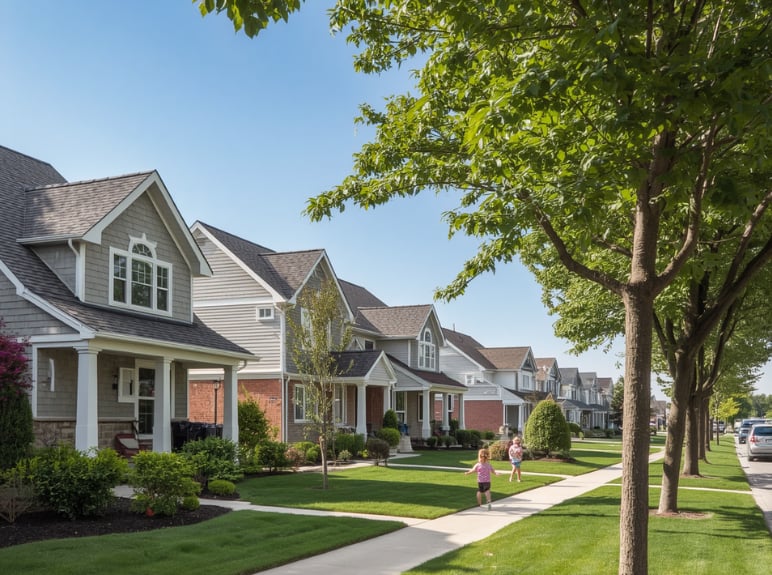
The Direct Answer: High-End Resilience vs. Urban Volume
The West GTA Prestige Corridor specifically Oakville and the Halton Region is currently outperforming East Toronto in long-term value retention and luxury price stability. While East Toronto remains a high-turnover area, Oakville’s detached segment has entered a 2026 stabilization phase with projected appreciation rates of 1% to 3%. In contrast, East Toronto faces higher volatility due to a glut of condo inventory and greater sensitivity to entry-level financing.
The Deep Dive: A Tale of Two Micro-Markets
The real estate landscape in 2026 is defined by a "flight to quality." In East Toronto, the market has historically relied on rapid appreciation fueled by urban density and investor activity. However, with the disappearance of speculative momentum, price growth in the 416 east-end has moved sideways. High inventory levels in the condo sector have created a buyer’s market that is dragging down aggregate appreciation rates, even as detached homes in prime pockets remain competitive.
Conversely, the West GTA Prestige Corridor anchored by Oakville is benefiting from a scarcity of "turnkey" family estates. We are seeing a distinct trend where "move-up" buyers are prioritizing the stability of Halton over the density of the city. While the broader GTA has seen a price correction of roughly 6.4% year-over-year, Oakville’s premium freehold segments are leading the recovery. This is due to a high-net-worth demographic that is less impacted by temporary rate fluctuations and more focused on long-term lifestyle assets.
Local Nuance: Why Oakville Holds the Edge
In Oakville, the market is not a monolith; it is a collection of high-performing micro-markets that offer unique protection against broader economic downturns:
-
South East Oakville & Joshua Creek: These neighborhoods remain the gold standard. Large lot sizes and proximity to top-tier schools ensure a consistent "affordability floor" that East Toronto's smaller lots cannot match.
-
Glen Abbey: Thanks to its world-class golf course and prestigious school catchments, this area maintains a structural supply-demand imbalance.
-
Bronte Village: While the condo market across the GTA has softened, Bronte’s luxury waterfront residences continue to attract downsizing empty-nesters, keeping appreciation rates more resilient than the investor-heavy towers of East Toronto.
Key Market Comparisons (2026 Forecast)
-
Inventory Levels: Oakville freehold inventory remains tight, whereas East Toronto is seeing a spike in active listings.
-
Buyer Profile: Oakville is dominated by end-users (families); East Toronto has a higher concentration of investors currently deleveraging.
-
Negotiation Power: Buyers in Oakville have more leverage in the $2M+ range, but the floor for "entry-level" detached homes is firming up faster than in the city.
Contact Martin Group
Navigating the 2026 Halton market trends requires a partner who understands the nuances of the West GTA Prestige Corridor. Whether you are looking to list one of the many Oakville luxury homes or are searching for your next investment, we provide the data-driven insights you need to succeed.
Contact Martin Group today to discuss your 2026 real estate strategy.
"Profit from our experience."

Frequently Asked Questions
Is Oakville outperforming East Toronto in 2026?
On value retention and luxury price stability, yes. Oakville's detached segment is in a stabilization phase with projected appreciation of 1% to 3%, while East Toronto carries more volatility from condo inventory and entry-level financing sensitivity.
How far has the broader GTA corrected?
Roughly 6.4% year over year. Oakville's premium freehold segments are leading the recovery out of that correction rather than following it.
Why has East Toronto price growth stalled?
The market there historically ran on rapid appreciation fuelled by density and investor activity. With speculative momentum gone and condo inventory high, aggregate appreciation has moved sideways even where detached pockets remain competitive.
What makes Oakville's buyer base more resilient?
It skews high-net-worth and end-user. Those buyers are less affected by temporary rate fluctuations and are making long-term lifestyle decisions rather than timing a trade.
Which Oakville neighbourhoods hold value best?
South East Oakville and Joshua Creek set the standard, with large lots and top-tier school catchments creating an affordability floor East Toronto's smaller lots cannot match. Glen Abbey holds a structural supply-demand imbalance thanks to its golf course and school catchments.
Should I be comparing these two markets at all?
They serve genuinely different buyers — one is an urban, high-turnover market and the other a low-density prestige market. The useful comparison is against your own timeline and what you need the home to do, not against a headline appreciation number.