The Direct Answer (The "Snippet")
As of January 1, 2026, the capital gains inclusion rate in Canada has increased to 66.67% for individual gains exceeding $250,000 annually. For a South Oakville investment property, this means that while your first $250k in profit is taxed at the 50% rate, any amount above that is subject to the higher inclusion. Corporations and most trusts are taxed at the full 66.67% on all gains from dollar one.
The Deep Dive
The shift in capital gains policy marks a significant change for the Halton Region’s real estate landscape. For decades, investors operated under a flat 50% inclusion rate. Under the current 2026 legislation, the "taxable" portion of your profit climbs once you exceed the $250,000 individual threshold. For example, if you realize a $600,000 gain on a luxury rental, the first $250,000 is included at 50%, but the remaining $350,000 is now included at 66.67%, potentially pushing you into a higher tax bracket and reducing your net walk-away equity.
For those holding assets within a corporation, the impact is even more immediate. Corporations do not benefit from the $250,000 "safe harbor" threshold; every dollar of gain is subject to the 66.67% inclusion rate. This change has fundamentally altered the math for professional landlords and holding companies in the GTA, making the timing of a sale and the use of capital cost allowance (CCA) recovery more critical than ever before.
Local Nuance
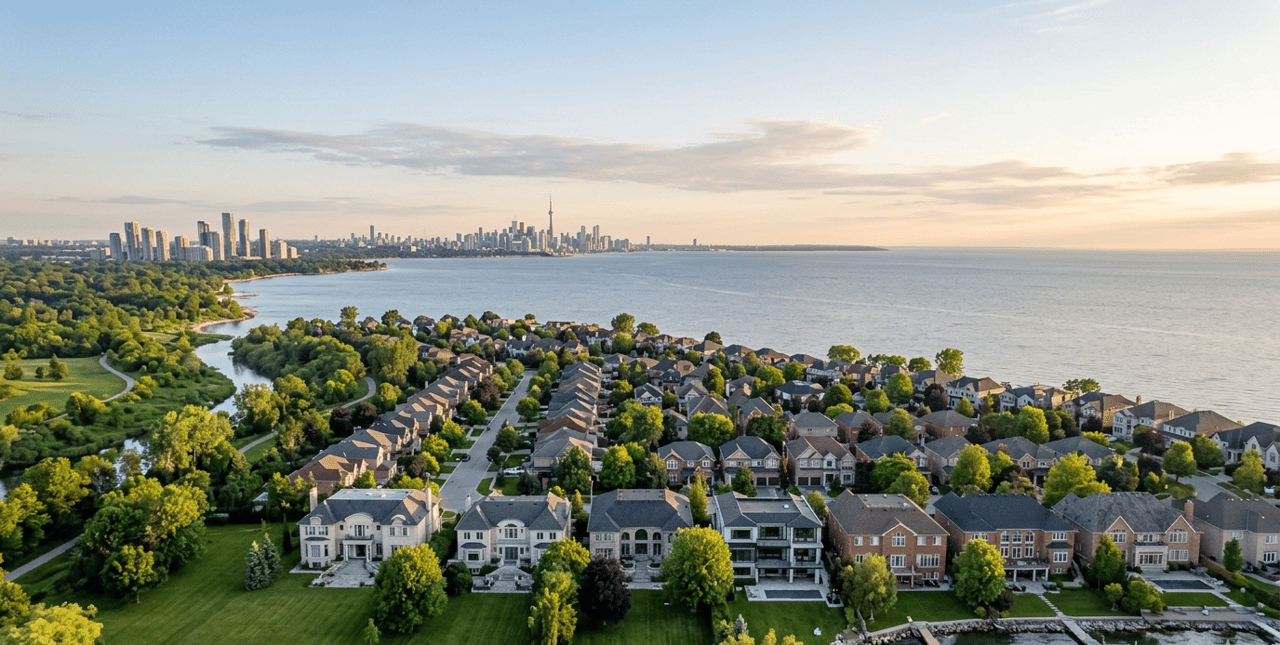
In South Oakville, specifically in high-appreciation neighborhoods like Old Oakville, Bronte, and Coronation Park it is common for long-term investment properties to see gains well into the seven figures. A detached home purchased a decade ago may now face a tax liability significantly higher than originally projected.
With the Oakville Town Council maintaining a focus on infrastructure and the local 2026 Buyer’s Market for detached homes (currently seeing an absorption rate of approximately 18.4%), investors must be strategic. If you are selling a high-value asset in South Oakville, you aren't just navigating market demand; you are navigating a tax environment where:
-
Property Type Matters: Condo townhomes in Oakville are currently in a "Balanced Market" (41.5% absorption), offering a faster exit if you need to liquidate to stay under a certain tax year's threshold.
-
ACB Adjustments: Local investors are increasingly documenting high-end renovations—common in South Oakville’s luxury market—to raise their Adjusted Cost Base (ACB) and mitigate the reportable gain.
-
Strategic Staging: In a market where "Days on Market" is averaging 28–32 days, planning your closing date to fall in a specific tax year is a viable tactic to manage the $250,000 limit.
Key Takeaways for 2026 Property Sales
-
Individual Advantage: You still get the 50% inclusion rate on your first $250,000 of annual gains.
-
Corporate Reality: All corporate real estate gains are now subject to the 66.67% rate.
-
Exemption Stability: Your Principal Residence Exemption remains untouched and 100% tax-free.
-
Portfolio Timing: Consider staggered sales if you own multiple units to maximize the annual $250k lower-rate threshold.
Get In Touch
Understanding the intersection of federal tax law and local market shifts is essential for protecting your wealth. Whether you are rightsizing your portfolio or liquidating a South Oakville asset, you need a strategy that prioritizes your bottom line. We invite you to contact Martin Group for a confidential consultation to review your property’s current value and discuss an optimized exit strategy.
Profit from our experience.