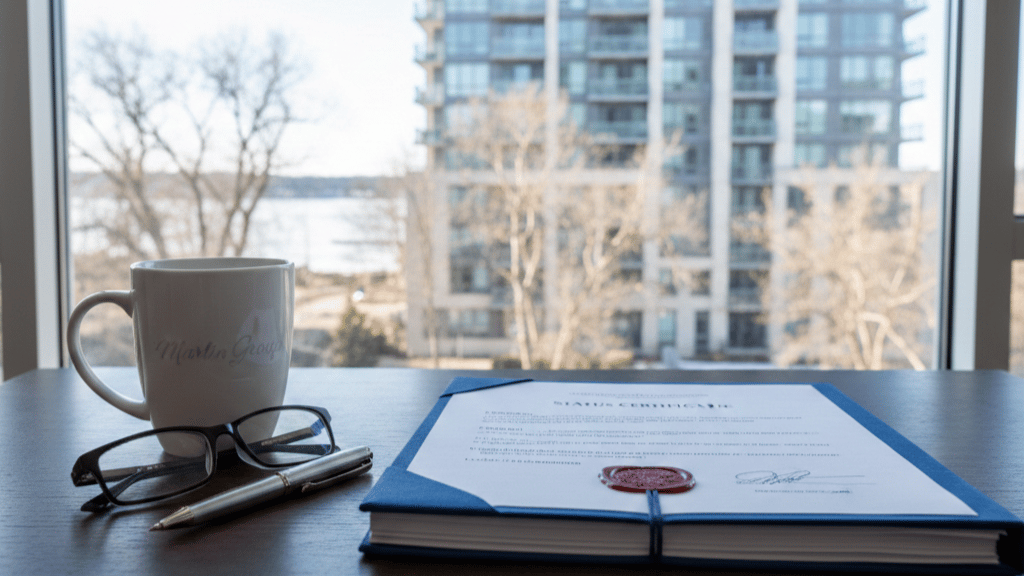
The Direct Answer: What is a Status Certificate?
A Status Certificate is a critical legal document providing a snapshot of a condominium corporation’s financial and legal health. In Ontario, it discloses the unit’s common expenses, the adequacy of the reserve fund, any pending lawsuits, and upcoming special assessments. Under the Condominium Act, a corporation must provide this document within 10 days of a request for a fee of $100 (plus HST). Reviewing it is a non-negotiable step in condo due diligence.
The Deep Dive: Why This Document Matters
Think of the Status Certificate as a "home inspection" for the entire building's finances. While you own the space inside your walls, you are also becoming a partial owner of a multi-million dollar corporation. If the building has a history of poor management or a depleted reserve fund, you the new owner could be on the hook for a special assessment, which is a large, unplanned payment to cover major repairs like roofing or underground parking issues.
Beyond the financials, the certificate outlines the condo bylaws and rules. This governs your daily life, from whether you can have a dog over a certain weight to restrictions on short-term rentals. In a competitive market, some buyers are tempted to waive the condition of a lawyer's review of this document to make their offer more attractive. However, doing so is widely considered reckless, as it exposes you to unlimited financial liability and potential litigation that existed long before you signed the deed.
Local Nuance: Oakville & Halton Region
In Oakville’s diverse condo market, the implications of a Status Certificate vary by neighborhood:
-
Bronte Village: Many waterfront buildings are older and may be undergoing significant "envelope" repairs. A Status Certificate here is vital to ensure the reserve fund can handle the costs of lakefront maintenance.
-
Uptown Core (Oak Park): With a high density of newer builds, the focus shifts to ensuring the developer’s initial budget was realistic and that the corporation isn't facing "first-year deficit" issues.
-
Glen Abbey: Here, you’ll find many townhome condominiums. The Status Certificate will clarify exactly which exterior elements (like windows or decks) are your responsibility versus the corporation’s.
Key Components to Review:
-
The Reserve Fund Study: Does the building have enough saved for future major repairs?
-
Legal Proceedings: Is the corporation currently suing the developer or being sued by a contractor?
-
Common Expense Increases: Are there planned hikes in your monthly maintenance fees?
-
Insurance: Does the corporation have adequate coverage for the entire structure?
Navigating the complexities of the Oakville condo market requires more than just a keen eye; it requires a strategy backed by data and local expertise. Whether you are eyeing a luxury suite in Old Oakville or a modern loft in Joshua Creek, we ensure your investment is protected from the start.
Contact Martin Group today to secure your future in the Halton Region
Navigating the complexities of the Oakville condo market requires more than just a keen eye; it requires a strategy backed by data and local expertise. Whether you are eyeing a luxury suite in Old Oakville or a modern loft in Joshua Creek, we ensure your investment is protected from the start.
Contact Martin Group today to secure your future in the Halton Region.
"Profit from our experience."