The Direct Answer
In 2026, Oakville remains one of the most tax-efficient places to buy real estate in the GTHA because it does not have a Municipal Land Transfer Tax (MLTT). Unlike Toronto, where buyers face a "double tax," Oakville residents only pay the Ontario Provincial Land Transfer Tax. On a $1.5M home, this translates to a savings of approximately $26,475 compared to the same purchase in Toronto; capital that Oakville buyers often redirect into custom renovations or lower mortgage principals.
The Deep Dive
For high-net-worth individuals and families moving within the Halton Region, the absence of a secondary municipal tax is a significant financial advantage. While Toronto has recently increased its luxury tax tiers for 2026 (reaching as high as 8.6% for ultra-luxury properties), Oakville adheres strictly to the provincial sliding scale.
The Ontario Land Transfer Tax is a marginal tax, meaning different portions of your home’s value are taxed at different rates. In 2026, the provincial brackets for a single-family residence are:
-
0.5% on the first $55,000
-
1.0% on the amount between $55,000 and $250,000
-
1.5% on the amount between $250,000 and $400,000
-
2.0% on the amount between $400,000 and $2,000,000
-
2.5% on any amount exceeding $2,000,000
Local Nuance: The Oakville Advantage
In premium Oakville enclaves like Joshua Creek or Southeast Oakville, where property values frequently exceed the $2M mark, the savings become even more pronounced. For instance, a luxury estate in Morrison priced at $4M would trigger a Toronto municipal tax bill of over $118,000. In Oakville, that municipal bill is exactly zero.
Furthermore, while property taxes in Oakville saw a modest 1.96% overall increase in the 2026 budget—the lowest among neighbouring municipalities—the town remains committed to fiscal responsibility. The introduction of the new dedicated stormwater fee in 2026 has allowed the town to maintain these lower property tax rates while investing in the infrastructure and climate resiliency that keeps neighborhoods like Glen Abbey and Bronte so desirable.
Key Takeaways for Oakville Buyers
-
Single Tax Jurisdiction: You only pay the provincial portion of the LTT.
-
First-Time Buyer Rebates: Eligible buyers can still receive a provincial rebate of up to $4,000.
-
Luxury Market Savings: The higher the home price, the more you save by choosing Oakville over Toronto.
-
Investment Potential: Lower closing costs mean more immediate equity in your Halton Region investment.
Navigating the closing costs of a luxury home requires a strategic approach and localized expertise. If you are planning a move to Oakville in 2026, ensure your transition is as profitable as it is seamless.
Ready to Secure Your Piece of Oakville?
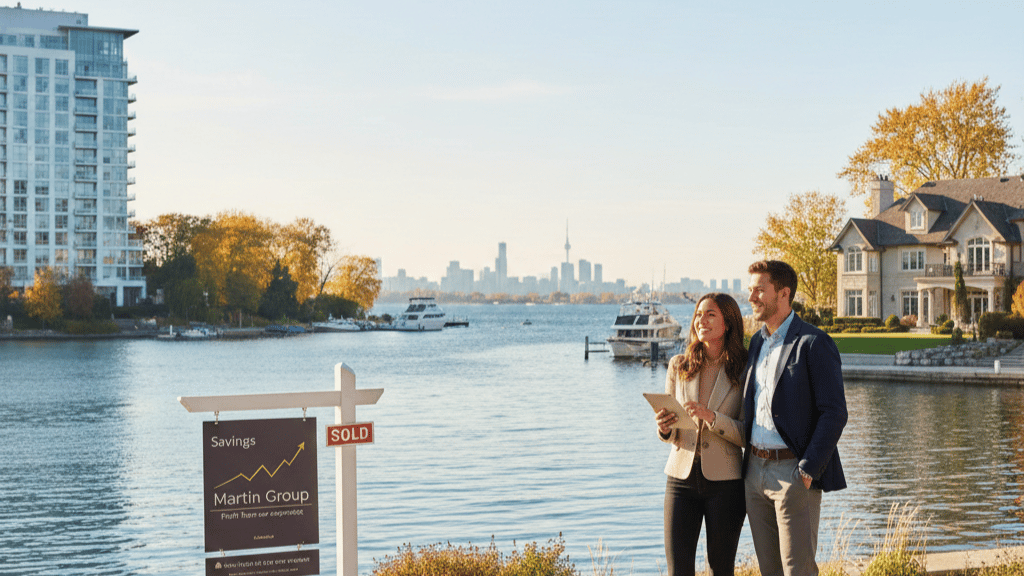
In a competitive 2026 market, understanding the financial nuances of a transaction from tax advantages in Bronte to investment yields in Joshua Creek—is what separates a standard purchase from a strategic investment. At Martin Group, we don't just find you a home; we optimize your entire real estate portfolio through data-driven insights and unmatched local hyper-expertise.
Whether you are relocating from the GTA or upgrading within the Halton Region, ensure your capital works as hard as you do.
Contact Martin Group today to discuss your next move.
"Profit from our experience."

Frequently Asked Questions
Does Oakville have a municipal land transfer tax?
No. Oakville has no Municipal Land Transfer Tax, so buyers pay only the Ontario Provincial Land Transfer Tax. Toronto buyers face both, which is why the same purchase costs materially more there.
How much does buying in Oakville instead of Toronto actually save?
On a $1.5M home, approximately $26,475. The gap widens at higher price points — a $4M estate in Morrison would trigger a Toronto municipal tax bill of over $118,000, while in Oakville the municipal bill is zero.
What are the Ontario land transfer tax brackets in 2026?
It is a marginal tax on a sliding scale for a single-family residence: 0.5% on the first $55,000, 1.0% from $55,000 to $250,000, 1.5% from $250,000 to $400,000, 2.0% from $400,000 to $2,000,000, and 2.5% on any amount above $2,000,000.
Can first-time buyers claim a land transfer tax rebate?
Yes. Eligible first-time buyers can still receive a provincial rebate of up to $4,000.
What happened to Oakville property taxes in 2026?
The 2026 budget carried a 1.96% overall increase, the lowest among neighbouring municipalities. A new dedicated stormwater fee allowed the Town to hold property tax rates down while still investing in infrastructure and climate resiliency.